
⏱️ Quick Answer: When should oak trees not be pruned in Niagara Falls NY?
Oak trees should strictly not be pruned between April and July in Niagara Falls, NY. This critical timeframe marks the seasonal period of strict spring pruning restrictions enforced across Western New York to protect the regional canopy.
During these warm spring and early summer months, any active cutting or trimming triggers sap leakage. This sap instantly attracts picnic beetles (Nitidulidae) that act as vectors for lethal fungal tree diseases. If you are planning any structural changes, timing your project around the laws of oak wilt tree pruning Niagara Falls NY is the single most vital step a homeowner can take for absolute seasonal pruning safety and comprehensive tree infection prevention.
Why Lafayette Avenue Tree Maintenance Dictates Your Property Value
For homeowners investing heavily in residential landscapes, mature oak trees (Quercus) are the undisputed crown jewels of your property’s exterior ecosystem. If you manage a historic property, an expansive residential estate, or a multi-family home in Western New York, establishing a routine schedule for Lafayette Avenue tree maintenance is a matter of long-term financial security.
The Direct Economic and Ecological Impact:
- Substantial Home Equity Boost: Real estate analysis across Niagara County indicates that well-maintained, mature shade trees can increase a home’s baseline resale valuation by 5% to 20%.
- Microclimate Temperature Control: A fully extended oak canopy acts as natural air conditioning. By shading expansive roof surfaces, driveways, and windows, these trees cut residential energy cooling costs significantly during humid July afternoons.
- Stormwater Runoff Absorption: The massive root networks of established oaks absorb hundreds of gallons of water daily, stabilizing local clay soils along the Niagara River corridor and preventing localized basement flooding or sidewalk lifting.
However, ignoring seasonal care protocols can immediately transform these green assets into massive financial liabilities. A single poorly timed cut can lead to the death of a majestic tree within weeks. This is why risk-conscious property owners consistently rely on verified, certified Niagara Falls tree services to navigate regional environmental laws and protect their real estate investments from catastrophic fungal outbreaks.
Understanding Fungal Tree Diseases: What is Oak Wilt?
Among all active fungal tree diseases affecting urban forestry across North America today, oak wilt caused by the aggressive, non native fungus Bretziella fagacearum is uniquely destructive. It operates as a highly contagious, fast-acting vascular disease that targets the water-transport channels (the xylem) of the tree.
Think of the xylem as a tree’s internal veins, responsible for pumping moisture and life-sustaining nutrients upward from the root system to the highest leaves in the canopy. When oak wilt spores enter these active layers of the wood, they rapidly replicate. The tree, recognizing an internal threat, attempts to defend itself by producing chemical blockages called tyloses to halt the invader.
Unfortunately, this defensive response backfires. The tree completely plugs its own vascular system, entirely cutting off its internal flow of water and nutrients. Starved of basic sustenance, the entire canopy suffocates and starves from the top down.
Red Oak vs. White Oak Family Vulnerability
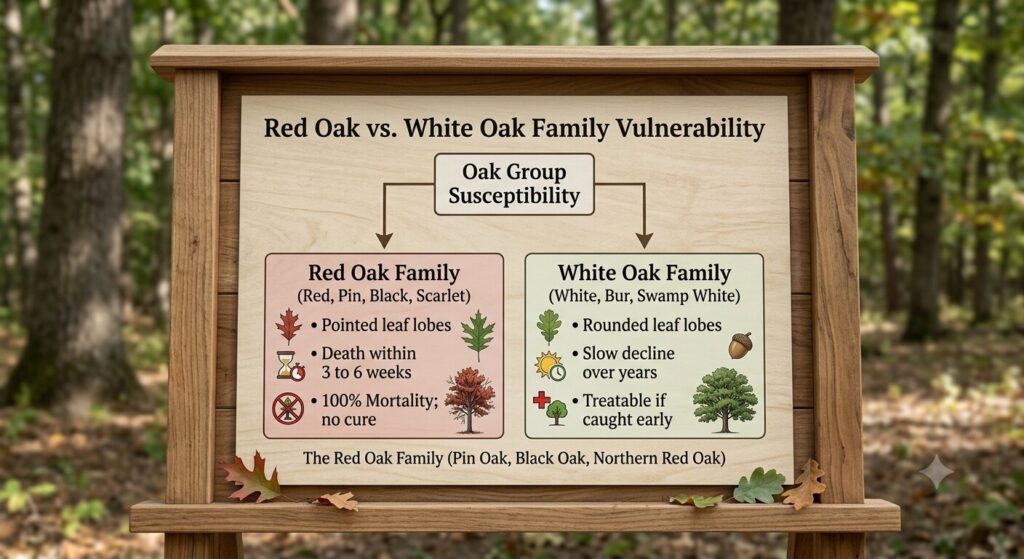
The Red Oak Family (Pin Oak, Black Oak, Northern Red Oak)
Trees within the Red Oak group are categorized by leaves with sharp, pointed, bristle-tipped lobes. These varieties feature wide, open vascular pathways that allow the Bretziella fagacearum fungus to travel unimpeded. Consequently, trees in this category are at extreme risk; once infected, they exhibit an irreversible 100% mortality rate, usually shedding their entire canopy and dying completely within 3 to 6 weeks.
The White Oak Family (White Oak, Bur Oak, Swamp White Oak)
Trees within the White Oak group have leaves with rounded, smooth lobes. Their tighter internal wood design restricts the rapid longitudinal travel of the fungus. While white oaks can still contract the disease, they experience a much slower decline, often losing only one or two limbs per year over an extended period. This slower progression provides homeowners with a viable window to save the tree using specialized macro-infusions administered during an expert oak tree health inspection.
How It Spreads: The Mechanics of Tree Infection Prevention
To execute flawless tree infection prevention on your property, you must understand the two distinct transmission pathways utilized by this fungal pathogen to move across Niagara County neighborhoods.
1. Overland Transmission via Sap-Feeding Beetles
When an infected oak tree dies, the fungus produces specialized spore mats just beneath the bark. As these mats grow, they create pressure that cracks the bark open, emitting a sweet, yeasty, fruity odor that replicates the smell of fermenting fruit. This aroma attracts small sap-feeding beetles (picnic beetles).
As the beetles feed on these sticky mats, thousands of microscopic fungal spores attach to their bodies. If a neighboring homeowner performs unseasonal DIY pruning on a healthy oak between April and July, the fresh cut releases tree sap. The beetles detect this sap, land on the open wound to feed, and deposit the spores directly into the healthy tree’s open vascular system.
2. Subterranean Transmission via Root Grafting
In older, established neighborhoods like Lafayette Avenue, LaSalle, and DeVeaux, mature oak trees are planted closely along curbs, sidewalks, and property boundaries. Underground, the root systems of these trees expand widely, frequently crossing paths with roots of neighboring oaks of the same group.
When these roots make contact, they naturally fuse together through a process called root grafting, sharing vascular fluids. Once oak wilt infects a single tree on a street, the fungus can travel directly through these underground root connections, moving from house to house seamlessly and destroying an entire neighborhood block without a single insect vector ever stepping foot on the property.
High Risk Trimming Markers & Prevention Priorities
Managing a property safely requires identifying exactly which environmental events and actions carry the highest risk profile during the changing seasons in Western New York.
| Source of Wood Injury | Localized Risk Level | Primary Biological Cause | Key Preventative Action |
|---|---|---|---|
| Active Trimming / Pruning | 🔥 Extreme (April–July) | Unseasonal DIY cutting or hiring uncertified lawn crews who create open wounds. | Adhere strictly to the spring pruning restrictions. |
| Root Interconnection | 🔥 Extreme (Year-Round) | Roots grafting naturally underground beneath residential boundary lines. | Implement mechanical root trenching barriers via specialist tools. |
| Storm Damage & Breakage | ⚠️ High (Active Weather) | High winds, summer thunderstorms, or sudden heavy limb snaps. | Arrange immediate arborist clean cuts and apply protective wound sealers. |
| Construction Traffic | ⚙️ Moderate (Building Season) | Soil excavation, driveway repaving, or heavy machines compacting root zones. | Establish strict protective fencing around root zones before any work starts. |
| Lawn Equipment Hits | 🌿 Low to Moderate | Lawn mower decks or string trimmers scraping bark at the base. | Place a wide, clean ring of organic wood mulch around the base flare. |
Recognizing Critical Diseased Oak Tree Symptoms
Early diagnosis can mean the difference between saving your yard’s canopy or paying thousands of dollars for emergency removal services. Homeowners must walk their properties and visually inspect their oak trees at least once a month from late spring through late summer, searching specifically for these three progressive diseased oak tree symptoms:
1. Rapid Leaf Browning Along Margins
A definitive indicator of an active oak wilt infection is a distinct leaf bronzing and discoloration pattern. Rather than turning a uniform yellow like a tree experiencing drought, individual leaves will begin turning a dull tan, bronze, or brown starting entirely from the outermost tips and margins. The leaf tissue will wither inward toward the stem, but the base veins closest to the leaf stem often remain a normal green color during the initial stages of drop.
2. Sudden Summer Leaf Drop
Healthy oak trees across Niagara Falls maintain a rich, dense green canopy all through June, July, and August. They should never discard large volumes of leaves during the peak of the growing season. If you step outside in mid-summer and discover a heavy accumulation of wilting, green, or half-browned leaves littering your grass, driveway, or sidewalk, your tree is experiencing severe vascular failure.
3. Top-Down Canopy Decline
Because the fungus severely limits the tree’s internal pumping capacity, moisture fails to reach the furthest points of the upper canopy first. The very top of the tree’s crown will begin to look thin, bare, and skeletal. This upper branch dieback progresses rapidly downward through the lower interior limbs until the entire tree is defoliated.
Diagnostic Reference: Oak Wilt vs. Common Environmental Factors
Because several non-lethal conditions can mimic tree decline, homeowners should use this comparative diagnostic reference to evaluate canopy issues accurately.
| Observation Factor | Active Oak Wilt Infection | General Drought / Heat Stress | Anthracnose / Minor Leaf Fungus |
|---|---|---|---|
| Development Speed | ⚡ Extremely Rapid (Weeks) | ⏳ Slow & Gradual (Months) | ⏳ Moderate (Spring dampness) |
| Shedding Pattern | Leaves drop suddenly while still full or half-green. | Leaves turn entirely yellow or brown before dropping. | Minor leaf spotting; low overall defoliation rates. |
| Canopy Location | Begins at the upper crown tips and moves downward. | Uniform brown coloring across the entire outer canopy. | Confined mostly to damp, lower interior branches. |
| Property Spreading | Moves systematically to adjacent oaks of the same group. | Stays isolated to specific trees with poor soil or root damage. | Spreads broadly to multiple unrelated species at once. |
Safe Tree Maintenance Strategies for Lafayette Avenue Homeowners
Observing the active spring oak wilt pruning ban does not mean you must completely stop caring for your yard. Homeowners can implement several proactive, safe, and highly effective tree care practices during the restricted months to keep their oaks robust and resilient:
1. Establish Proper Mulch Rings
Applying a clean layer of organic hardwood mulch around your tree’s root flare provides exceptional protection. Mulch regulates soil temperature during hot July spells, seals in vital moisture, and forms a physical barrier that keeps heavy lawn mowers and sharp string trimmers safely away from the bark, preventing trunk wounds.
- The Application Standard: Spread a layer of natural wood mulch 2 to 4 inches deep across the root zone. Crucially, pull the mulch back 3 to 4 inches away from the active base flare of the trunk. Never stack mulch directly against the bark (avoid harmful “mulch volcanoes”), as this traps moisture, creates rot, and invites boring insects into the base wood.
2. Practice Deep, Consistent Irrigation
Environmental stress compromises a tree’s natural immune system, leaving it highly vulnerable to opportunistic pests like the two-lined chestnut borer. When Western New York experiences extended dry periods in mid-summer, providing direct supplemental watering supports overall tree vitality.
- The Application Standard: Avoid light, daily lawn waterings that merely wet the surface grass. Instead, place a slow-drip soaker hose around the outer two-thirds of the tree’s branch spread (the drip line). Run the water on a low trickle for several hours to let moisture soak deep into the soil profile where the active root system drinks.
📅 The Niagara Falls Seasonal Pruning & Tree Care Calendar
To maintain total landscape safety and maximize tree health, structure your yearly maintenance around this reliable, climate-specific calendar:
  January – March (Dormant Season)
  ┌────────────────────────────────────────────────────────┐
  │ • Safest window for structural pruning & thinning      │
  │ • Zero risk of fungal or insect activity               │
  └────────────────────────────────────────────────────────┘
  April – July (Active Ban Window)
  ┌────────────────────────────────────────────────────────┐
  │ • NO ROUTINE OAK PRUNING ALLOWED                       │
  │ • Focus on mulch rings, watering, and monitoring       │
  └────────────────────────────────────────────────────────┘
  August – September (Late Summer)
  ┌────────────────────────────────────────────────────────┐
  │ • Check canopy for thinning or early yellowing         │
  │ • Mitigate heat stress via deep watering               │
  └────────────────────────────────────────────────────────┘
  October – December (Pre-Dormancy)
  ┌────────────────────────────────────────────────────────┐
  │ • Identify storm hazards as leaves drop naturally      │
  │ • Pre-book winter structural trimming slots            │
  └────────────────────────────────────────────────────────┘
Certified Arborist Recommendations for Emergency Storm Management
Severe summer thunderstorms, high-wind microbursts, and unpredictable lake-effect weather patterns across Niagara County can split heavy tree limbs or shatter major structural branches during high-risk months. When natural storm damage occurs between April and July, follow these immediate, specialized safety protocols:
- Avoid Inexperienced DIY Cuts: Leaving a torn, jagged branch stub exposed on an oak tree creates an immediate entry point for sap-feeding beetles. Never attempt to prune or patch storm-damaged oaks yourself during the restricted months.
- Make Clean, Precise Remedial Cuts: A qualified professional should be brought in to cleanly trim the damaged limb right at the branch collar, removing fractured wood without wounding the tree’s natural healing tissue.
- Apply Specialized Protective Sealants Immediately: While professional arborists generally avoid using artificial tree paints or wound dressings for everyday maintenance, emergency storm damage on oaks during the spring ban is the vital exception. Spraying a specialized pruning sealer or non-toxic latex paint directly over the fresh cut within 15 to 30 minutes blocks the scent of leaking sap, preventing destructive bark beetles from discovering the wound site.
Why Professional Niagara Falls Tree Services Are Essential
Caring for large, mature shade trees is a complex science that demands proper training, specialized commercial equipment, and strict compliance with local environmental preservation guidelines. Partnering with a fully insured, experienced tree care team provides immense benefits for your landscape:
- Strict Adherence to ANSI A300 Standards: Qualified professionals handle your canopy following rigorous ANSI A300 pruning protocols. This ensures every single cut respects the branch bark ridge and collar, allowing the tree to close wounds naturally and blocking deep heartwood rot.
- Complete Elimination of Tree Topping: Unregistered, uncertified contractors often try to save time by suggesting “tree topping” the harmful practice of cutting large limbs back to random stubs to lower a tree’s height. Topping shocks the tree, triggers weak, hazardous vertical shoots, and leaves massive open wounds that invite immediate disease.
- Rigorous Tool Sanitization Frameworks: Reputable local crews treat tool care with total seriousness. They sanitize all chainsaws, handsaws, and climbing gear with specialized antimicrobial solutions before starting work on your property. This ensures pathogens are never mechanically transferred from an infected yard to the healthy trees on your street.
When to Schedule a Professional Oak Tree Health Inspection
If your property features established oaks, relying on guesswork or waiting for visible decline can result in incredibly expensive removals. Scheduling a routine, annual oak tree health inspection with a qualified specialist allows you to identify hidden structural issues, poor soil conditions, or subtle disease markers long before they cause permanent damage. Proactive evaluations keep your property safe, protect your home’s equity, and ensure your property care aligns perfectly with professional arborist guidelines.
Frequently Asked Questions (FAQ)
Q: When should oak trees not be pruned in Niagara Falls NY?
A: Oak trees must strictly not be pruned between April and July in Niagara Falls, NY. This four-month window matches the peak activity periods for sap-feeding beetles and represents the highest risk for oak wilt transmission across Western New York.
Q: What role do spring pruning restrictions play in neighborhood safety?
A: Enforcing strict spring pruning restrictions ensures that property owners do not create fresh, sap-bleeding wounds that attract beetles. Because neighborhood trees often share connected root systems, this restriction shields the entire local canopy from contagious outbreaks.
Q: What are the primary diseased oak tree symptoms to watch out for?
A: The most common diseased oak tree symptoms include sudden leaf browning along outer edges while the base veins stay green, massive leaf drop during June or July, and rapid canopy thinning that starts at the top of the crown and works its way down.
Q: How can homeowners improve oak wilt prevention in close residential areas?
A: Successful oak wilt prevention relies on a few key steps: completely avoiding spring pruning, keeping a clean mulch ring around the trunk to prevent lawnmower gashes, deep watering during dry summer weeks, and scheduling annual expert health inspections.
Q: Why are safe oak trimming practices critical for winter tree care?
A: Utilizing safe oak trimming practices during the dormant winter months ensures clean cuts at the branch collar when bugs and fungi are entirely inactive. This allows the tree to begin forming clean wound-wood safely as soon as spring sap flow returns.
Protect Your Investment: Book a Local Assessment
Do not wait for your property’s canopy to display signs of mid-summer wilting or severe branch dieback. Keeping your landscape stable, beautiful, and secure requires a proactive approach to seasonal tree care.
Whether you need to clean up minor storm damage, arrange safe winter pruning, or schedule a comprehensive oak tree health inspection, our local team is ready to help.
👉 Click Here to Schedule a Professional Consultation with our Niagara Falls Certified Team Today!