Ice Storm Tree Damage in Buffalo: Immediate Steps to Protect Your Property

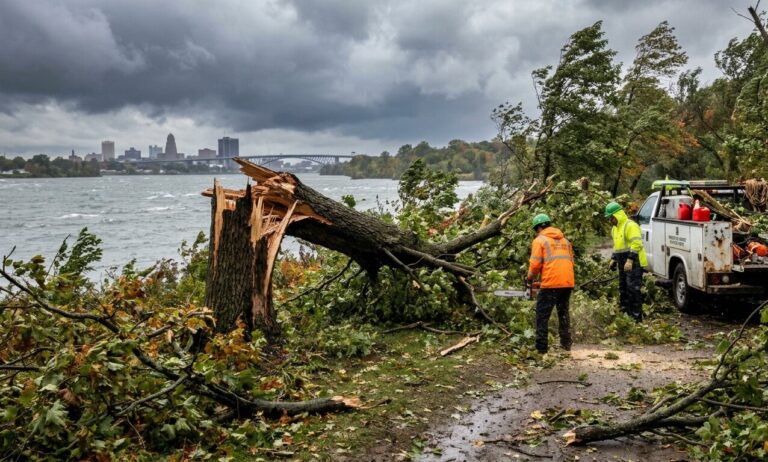
Ice storm tree damage in Buffalo can cause broken limbs, split trunks, uprooted trees, and dangerous branches near homes and power lines. After an ice storm, stay clear of unstable trees and electrical hazards, document damage safely, and arrange a qualified tree service inspection before attempting major pruning, removal, or cleanup.

What Should You Do After an Ice Storm Damages a Tree in Buffalo?

If an ice storm damages a tree, protect people and property first not the tree.

Freezing rain can coat branches with heavy ice, increasing the load on limbs and branch unions. Wind, snow accumulation, and existing structural defects can make the situation worse.

For Buffalo homeowners, the first priority is identifying immediate hazards:

  • Downed or damaged power lines
  • Trees leaning toward buildings
  • Large hanging branches
  • Split trunks or major limbs
  • Uprooted trees
  • Trees blocking driveways or access routes
  • Branches resting on roofs, vehicles, or utility infrastructure

Never approach a fallen electrical line or anything touching it. The National Weather Service warns that downed lines can remain energized and should be treated as dangerous.

For city-related service concerns involving public infrastructure or trees, Buffalo residents can use 311. The City of Buffalo’s Bureau of Forestry manages the city’s public urban forest and related forestry operations.

Why Ice Storms Cause Serious Tree Damage in Buffalo

An ice storm is particularly damaging because freezing rain creates a layer of ice over branches, twigs, and other exposed surfaces.

That additional weight can cause branches to bend beyond their normal capacity. When combined with wind, the mechanical stress can result in cracks, branch failure, trunk splits, or complete tree failure.

The risk is higher when a tree already has:

  • Weak branch unions
  • Included bark
  • Dead or decayed limbs
  • Long, overextended branches
  • Previous storm damage
  • Root or soil problems
  • Structural defects
  • Poorly maintained growth

University Extension guidance emphasizes that ice loading can create substantial stress on tree structures and that damaged branches require careful evaluation rather than indiscriminate cutting.

For properties throughout Buffalo and Western New York, the combination of freezing rain + wind + snow + existing tree defects can quickly transform ordinary winter weather into a hazardous tree event.

🚨 CALL EMERGENCY TREE SERVICE NOW: (716) 599-8733

Ice Storm Tree Damage: What Should You Check First?

Do not immediately begin cutting branches after an ice storm.

Start with a visual assessment from a safe location. Look at the entire tree rather than focusing only on the branch that is visibly broken.

A tree can appear mostly intact while still having a cracked trunk, damaged root system, or partially detached limb.

Type of Ice Storm DamageRisk LevelAppropriate Response
Small broken twigsLowGround-level cleanup if safely accessible
Broken small branchesModeratePruning/cleanup
Large hanging limbHighKeep area clear; professional assessment
Split major limbHighProfessional tree evaluation
Cracked or split trunkVery highUrgent professional assessment
Severely leaning treeVery highStay clear; emergency evaluation
Uprooted treeVery highProfessional assessment/removal
Tree on house or vehicleVery highEmergency/property response
Tree touching power lineCriticalStay away; contact utility/emergency services

Important: Risk depends on more than branch size. The tree’s location, structural condition, target area, and relationship to utilities all matter.

1. Stay Away From Downed Power Lines

This is the most important safety rule after an ice storm.

If a tree or branch has fallen onto a power line, do not touch the tree or attempt to cut it away.

Do not touch:

  • Downed wires
  • Branches contacting wires
  • Fences touching wires
  • Vehicles touching wires
  • Metal objects that may be energized

Do not assume a line is safe because the electricity appears to be off.

The National Weather Service recommends staying away from fallen power lines and objects in contact with them.

If there is an immediate threat to life or safety, call 911.

For appropriate City of Buffalo service requests, residents can contact 311.

2. Look for Ice-Damaged Tree Branches

Ice damaged tree branches are among the most common hazards following freezing rain.

Pay particular attention to branches that:

  • Are cracked but still attached
  • Are hanging over a driveway
  • Are suspended above a roof
  • Have torn bark
  • Are resting against another branch
  • Have unusually large cracks at their attachment point
  • Are bending downward under remaining ice

A partially broken branch can move suddenly as wind increases or temperatures change.

Do not stand underneath it to inspect the damage more closely.

University Extension guidance recommends professional evaluation when storm damage is beyond what can safely be handled from the ground.

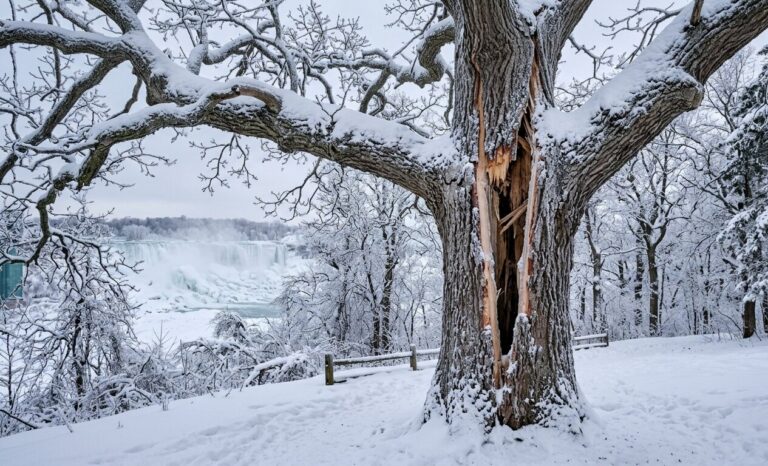
3. Check the Trunk for Splits and Structural Failure

The trunk is one of the most important areas to evaluate after severe ice loading.

From a safe distance, look for:

  • Vertical cracks
  • Major trunk splits
  • Broken leaders
  • Torn bark
  • Exposed wood
  • Separated branch unions
  • New leaning
  • Significant movement

A major trunk crack can compromise the tree’s structural integrity.

Do not attempt to pull apart, brace, climb, or cut a severely split tree yourself.

Large damaged trees can contain significant stored energy, making uncontrolled movement extremely dangerous.

4. Inspect the Ground Around the Tree

Ice storm damage can extend below the canopy.

A tree that has experienced root or anchorage failure may show:

  • Uplifted soil
  • Exposed roots
  • Soil cracking
  • A raised root plate
  • Movement around the trunk base
  • A new or worsening lean

An apparently standing tree can still be unstable if its root system has been compromised.

University Extension resources recommend checking for disturbed soil and root damage after major storm events because these conditions can affect tree stability.

5. Photograph the Damage Before Cleanup

If an ice-damaged tree has affected your property, document the condition when it is safe to do so.

Take photographs of:

  1. The complete tree
  2. Broken branches
  3. Trunk or limb cracks
  4. Damage to the roof
  5. Damaged vehicles
  6. Damaged fences or structures
  7. Fallen branches and logs
  8. The surrounding area

Keep estimates, invoices, and other storm-related documentation.

Do not enter an unsafe area merely to obtain a photograph.

🚨 CALL EMERGENCY TREE SERVICE NOW: (716) 599-8733

When Should You Call an Emergency Tree Service in Buffalo?

Professional emergency tree service in Buffalo NY is appropriate when the tree or branches create a hazard that cannot be safely managed from the ground.

Contact a qualified tree professional when you have:

  • A tree on a house
  • A tree on a vehicle
  • A large limb suspended above a structure
  • A split trunk
  • A severely leaning tree
  • An uprooted tree
  • Large branches blocking access
  • Extensive canopy failure
  • Hazardous storm debris
  • Structural damage requiring specialized equipment

Trees near electrical infrastructure require additional caution.

Penn State Extension advises homeowners not to work near utility lines and recommends utility coordination when trees or branches affect electrical infrastructure.

What Makes Ice Storm Tree Removal Different From Normal Tree Removal?

Storm-damaged trees are not ordinary removal jobs.

A standing healthy tree generally has predictable structural loading. A storm-damaged tree can contain multiple compromised components simultaneously.

For example, an ice-damaged maple may have:

broken crown β†’ split branch union β†’ partially suspended limb β†’ damaged trunk β†’ unstable root zone.

Removing one component can change the forces acting on another.

That is why emergency tree removal requires careful sequencing, appropriate equipment, and a controlled work zone.

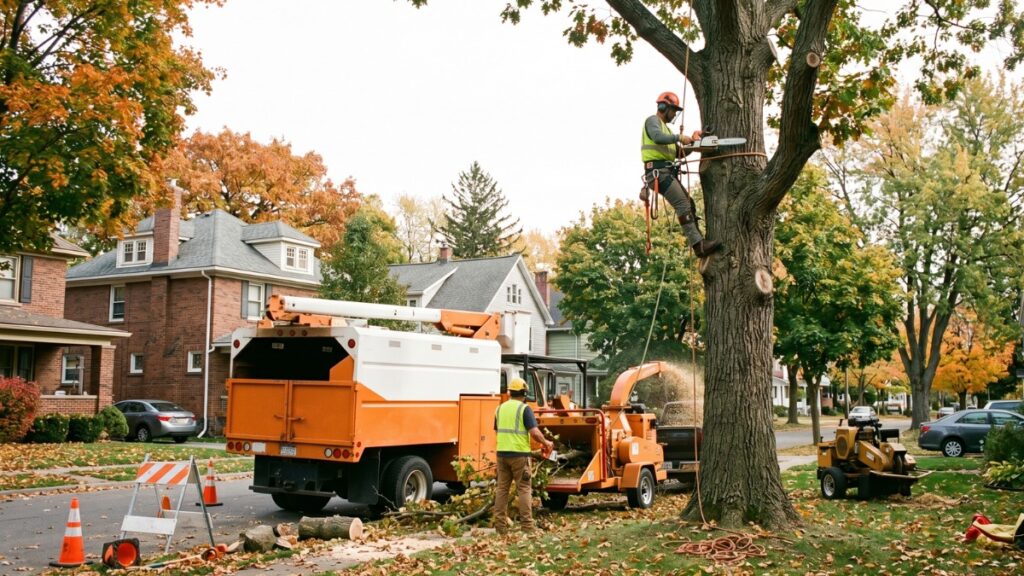
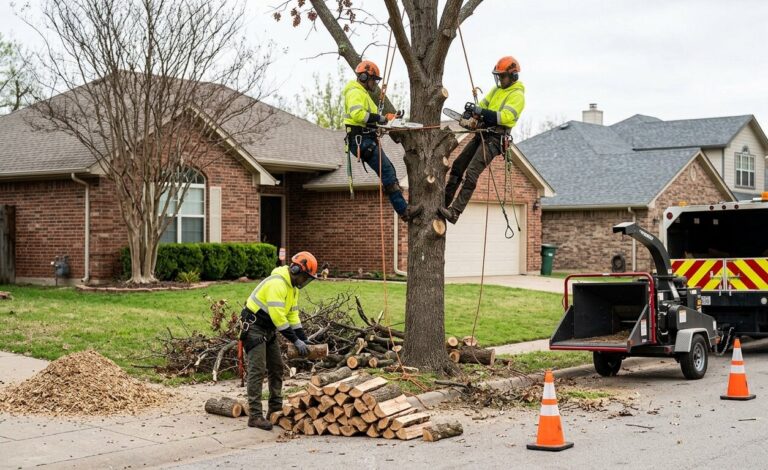
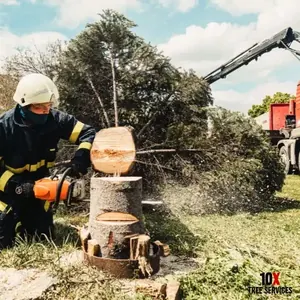
Depending on the property, professional crews may use specialized equipment such as:

  • Chainsaws
  • Chippers
  • Rigging systems
  • Bucket trucks
  • Cranes
  • Winches
  • Log-handling equipment

The appropriate equipment depends on tree size, access, location, structural condition, and nearby targets.

Should You Cut Ice Damaged Branches Yourself?

Only very small, accessible branches that can be safely handled from the ground should be considered for homeowner cleanup.

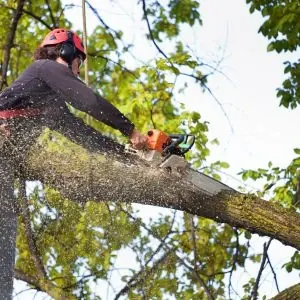
Avoid climbing storm-damaged trees or using a ladder around unstable branches.

Do not attempt to cut:

  • Large suspended limbs
  • Branches under tension
  • Major trunk sections
  • Trees leaning toward structures
  • Trees involving utility lines
  • Uprooted trees
  • Large branches above occupied areas

A branch can move unexpectedly when tension is released.

Professional arborists are trained to evaluate these forces and determine how damaged material should be removed safely.

Tree Removal Buffalo NY

Pruning or Tree Removal: Which Is Better After an Ice Storm?

Not every ice-damaged tree needs to be removed.

If the trunk, roots, and major structural components remain sufficiently sound, selective pruning may allow the tree to recover.

Removal becomes more appropriate when the remaining structure cannot be made acceptably safe or when the tree has experienced extensive structural failure.

ConditionPruningRemoval
Small broken branchesβœ“
Limited crown damageβœ“
One damaged major limbβœ“
Minor structural defectsβœ“
Major trunk splitβœ“
Severe root failureβœ“
Extensive structural damageβœ“
Severely uprooted treeβœ“
Dead hazardous treeβœ“
Tree on structureCase-specificOften
Utility involvementUtility coordinationCase-specific

The goal should not be β€œremove everything that looks damaged.”

The goal is to reduce risk while preserving healthy, viable tree structure whenever reasonably possible.

🚨 CALL EMERGENCY TREE SERVICE NOW: (716) 599-8733

Buffalo Winter Storm Cleanup: What Happens After Tree Removal?

Once hazardous material has been safely removed, the property may still require substantial cleanup.

Buffalo winter storm cleanup can include:

  • Limb removal
  • Log cutting
  • Brush removal
  • Wood chipping
  • Debris hauling
  • Driveway clearing
  • Roof-area cleanup
  • Lawn cleanup
  • Access restoration
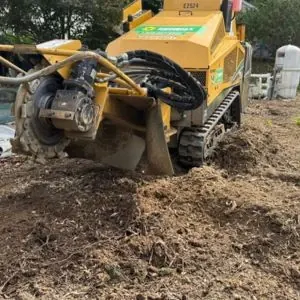
  • Stump grinding

The scope depends on the type and location of the storm damage.

For example, a fallen tree across a driveway requires immediate access restoration, while a damaged tree in the backyard may require controlled dismantling and complete debris removal.

What About a Buffalo Street Tree?

Not every tree near a Buffalo street is necessarily a homeowner’s responsibility.

The City of Buffalo Bureau of Forestry manages the city’s public urban forest, including street trees located within the public right-of-way and trees on city property.

Buffalo’s forestry information also addresses requirements involving tree work within the public right-of-way.

If you are unsure whether a damaged tree belongs to the property owner or falls within a public right-of-way, verify responsibility before beginning major removal work.

For city service requests, Buffalo provides 311 as the centralized contact channel.

How to Choose a Tree Service After an Ice Storm

Severe winter storms can create a sudden increase in demand for tree removal and cleanup.

That means homeowners should avoid choosing a contractor solely because they can arrive first.

Before authorizing major work, ask:

  • Is the company insured?
  • What exactly needs to be removed?
  • Can the tree be preserved through pruning?
  • What equipment will be required?
  • How will large limbs be lowered?
  • Who handles debris?
  • Is stump removal included?
  • Are there utility conflicts?
  • Is the estimate written and specific?

For significant work, professional credentials can also help establish competence.

Penn State Extension recommends looking for qualified arborists, checking credentials where appropriate, and verifying insurance before hiring tree professionals.

Can an Ice-Damaged Tree Recover?

Yes, some trees can recover from ice storm damage, depending on the severity and location of the damage.

A tree with minor branch loss may continue growing normally after proper pruning.

A tree with extensive crown loss, major trunk damage, root failure, or severe structural defects has a substantially different prognosis.

The key question is not simply:

β€œDoes the tree still have leaves?”

The more useful question is:

β€œDoes the remaining tree have sufficient structural integrity and biological capacity to remain a safe, viable tree?”

That determination is best made through a professional tree assessment when damage is significant.

Do Not Top an Ice-Damaged Tree

Storm damage sometimes leads property owners to request that the entire crown be cut back.

That is tree topping, and it is not an appropriate substitute for professional structural pruning.

Topping removes large portions of the canopy and creates large wounds. It can also produce weakly attached regrowth and increase future structural problems.

Penn State Extension explains that improper pruning cuts and topping can negatively affect tree health and structure.

Storm recovery should focus on targeted pruning, not unnecessary removal of healthy canopy.

How to Prevent Future Ice Storm Tree Damage in Buffalo

The best storm response begins before the storm.

Preventive tree care can reduce the likelihood of avoidable failures.

Structural Pruning

Remove dead, damaged, crossing, or structurally problematic branches before winter when appropriate.

Proper pruning can improve branch structure without unnecessarily reducing the tree’s healthy canopy.

Professional Tree Inspections

Periodic inspections can identify defects before they become emergency problems.

Pay particular attention to mature trees near homes, driveways, sidewalks, parking areas, and utility corridors.

Utility Clearance

Trees growing close to overhead electrical infrastructure require special consideration.

Never attempt to prune branches that are contacting or dangerously close to power lines yourself.

Appropriate Tree Selection

Species and individual tree architecture influence how trees respond to ice loading.

Branch arrangement, crown density, included bark, and overall structure can affect vulnerability to storm damage.

Address Existing Damage

A cracked or previously damaged tree should not simply be ignored because it survived the last storm.

Previous failures can leave structural defects that increase the consequences of the next severe-weather event.

What to Do After an Ice Storm Damages Your Tree: Buffalo Emergency Checklist

Use this sequence when dealing with ice storm tree damage in Buffalo:

Step 1: Protect people

Move people and pets away from damaged trees and hanging branches.

Step 2: Identify electrical hazards

Stay away from downed wires and trees contacting utility lines.

Step 3: Look for structural hazards

From a safe location, identify leaning trees, trunk splits, uprooted trees, and suspended branches.

Step 4: Protect property

Keep vehicles and people away from areas where additional branch or tree failure is possible.

Step 5: Document damage

Take photographs only when it is safe.

Step 6: Contact the appropriate authority

For city-related issues, use Buffalo 311. For electrical hazards, contact the appropriate utility or emergency service.

Step 7: Arrange professional tree service

Use qualified professionals for large, elevated, unstable, or structurally compromised trees.

Step 8: Complete storm cleanup

Remove remaining branches, logs, brush, and debris after hazardous material has been safely handled.

Step 9: Reinspect

Some damage may become more apparent after the initial storm.

What Do I Do After an Ice Storm Damages My Tree?

After an ice storm damages your tree, stay away from hanging branches, unstable trees, and anything touching a power line. If it is safe, photograph the damage, contact the appropriate utility or emergency service for electrical hazards, and have a qualified tree professional inspect large, split, leaning, or damaged trees before attempting removal.

Frequently Asked Questions About Ice Storm Tree Damage in Buffalo

Can an ice storm break a healthy tree?

Yes.

Heavy ice accumulation can cause branch and limb failure even in otherwise healthy trees. Existing structural defects, weak branch unions, decay, and previous damage can increase vulnerability.

Should I knock ice off my tree branches?

Avoid hitting, shaking, climbing, or pulling on heavily ice-covered branches.

Attempting to physically remove ice can cause additional branch movement or failure.

How soon should I remove an ice damaged tree?

There is no universal time period.

A tree creating an immediate hazard such as a severe lean, major trunk split, or structure involvement rs6requires prompt professional attention.

A minor broken branch may not constitute an emergency.

Should I remove a broken branch immediately?

If the branch is large, elevated, cracked, suspended, or located above a target such as a home, vehicle, or walkway, professional assessment is the safer option.

Does every ice-damaged tree need removal?

No.

Trees with limited, repairable damage may be candidates for selective pruning.

Extensive trunk, root, or structural damage may make removal the safer option.

What if an ice-damaged tree falls on my house?

Keep people away from the affected area and treat electrical hazards as an emergency.

If there is immediate danger, call 911. Photograph damage only when safe and notify the appropriate property insurer and professionals.

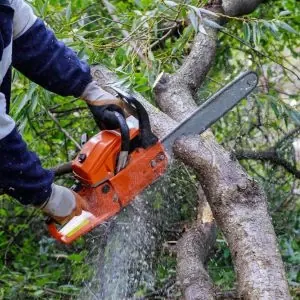
Can I use a chainsaw to remove storm-damaged branches?

Small ground-level material may be manageable for an experienced homeowner, but large storm-damaged limbs can be unpredictable because of stored tension and structural instability.

Avoid chainsaw work on elevated, suspended, split, or utility-involved trees.

Who handles damaged public trees in Buffalo?

The City of Buffalo Bureau of Forestry manages the city’s public urban forest, including public street trees and trees on city property. Buffalo directs residents to 311 for relevant city service requests.

Can I remove a tree touching a power line?

No.

Do not cut or climb a tree contacting an electrical line. Stay away and contact the appropriate utility or emergency service.

🚨 CALL EMERGENCY TREE SERVICE NOW: (716) 599-8733

Ice Storm Tree Damage Buffalo: The Bottom Line

Ice storm tree damage in Buffalo requires a safety-first response.

Freezing rain can overload branches, expose existing structural defects, damage trunks, disturb roots, and create dangerous conflicts with buildings and utility infrastructure.

The correct response is not simply to grab a chainsaw and start cutting.

Instead:

Identify the hazard β†’ stay clear of electrical lines β†’ document damage safely β†’ determine whether the tree is public or private β†’ obtain professional assessment β†’ prune or remove as appropriate β†’ complete storm cleanup.

For homeowners and businesses throughout Buffalo, timely attention to storm-damaged trees can reduce the chance that an already damaged limb becomes a secondary property or personal-safety hazard.