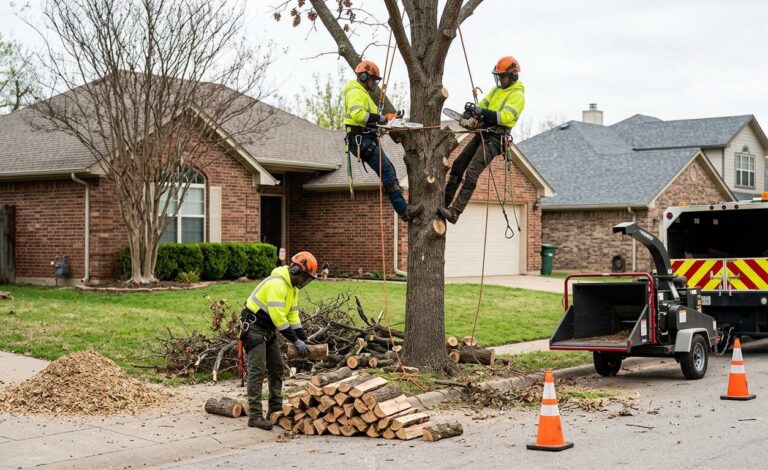
Tree care guide
Grand Island River Winds: How Heavy Storms Impact Island Trees & When to Act
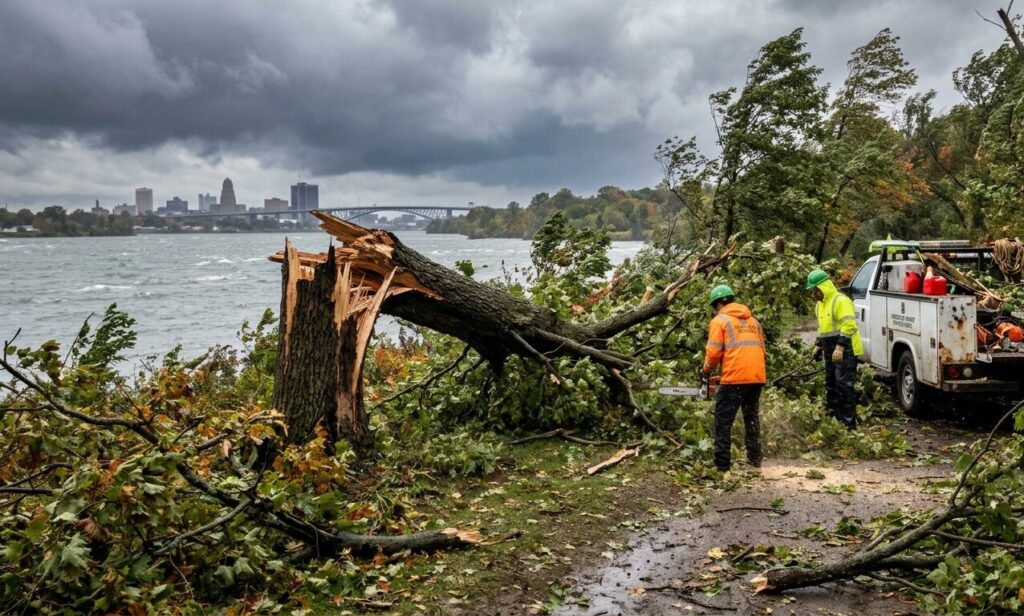
Strong winds, saturated soil, and severe storms can damage trees on Grand Island, NY, particularly where mature trees stand near homes, driveways, and exposed waterfront properties. Recognizing root movement, cracked trunks, hanging limbs, and sudden leaning helps homeowners decide when to seek professional tree assessment, storm cleanup, or emergency tree service.
Why Grand Island, NY Trees Face Wind and Storm Damage
Grand Island is located in the Niagara River between Buffalo and Niagara Falls. Its river setting, mature residential tree canopy, and Western New York weather make storm related tree inspection an important part of property maintenance.
The Town of Grand Island’s Community Forestry Management Plan identifies severe weather, including high winds, heavy precipitation, ice, and snow, as storm-preparedness concerns. Wet soil can also increase the likelihood of tree failure during strong winds because roots may lose stability. Read the Town of Grand Island Storm Preparedness Plan.
1. Niagara River Winds Can Stress Tree Canopies
Trees in open yards and exposed locations may receive less shelter from buildings and other vegetation. Strong gusts can place stress on branches, trunk unions, and root systems.
The degree of risk depends on wind intensity, tree structure, soil conditions, existing defects, and nearby targets such as houses or parked vehicles. Waterfront location alone does not mean a tree is unsafe.
2. Saturated Soil Can Increase the Risk of Uprooting
Heavy rainfall can saturate the soil around a mature tree. When strong winds push against its canopy, the root system may struggle to maintain stability.
Watch for fresh cracks in the ground, lifted soil around the trunk, exposed roots, or a sudden change in the tree’s lean. These warning signs require prompt professional assessment.
3. Mature Trees Can Develop Hidden Structural Defects
Grand Island properties contain a variety of mature trees, including maples and other established shade trees. Large trees can develop deadwood, decay, weak branch attachments, or trunk defects over time.
Wind can expose these weaknesses by breaking branches or worsening existing structural damage. A visual inspection from the ground can identify warning signs, but a qualified tree professional may need to assess defects that are difficult to see.
4. Lake-Effect Snow and Ice Add Another Source of Stress
Western New York winters can bring heavy snow, freezing rain, and ice accumulation. Added weight on branches can contribute to breakage, particularly when combined with strong winds or existing damage.
After a significant winter storm, inspect trees from a safe distance. Never climb a damaged tree or attempt to remove a large suspended branch yourself.
River Wind Tree Damage Grand Island: 7 Warning Signs to Recognize
Homeowners searching for river wind tree damage Grand Island should focus on visible changes that may indicate structural failure, rather than assuming every wind-damaged tree needs removal.
| Warning sign | What it may indicate | Recommended action |
|---|---|---|
| Sudden tree lean | Possible root or structural failure | Keep clear and request urgent assessment |
| Raised or cracked soil near the trunk | Possible root-plate movement | Keep people away and seek urgent professional help |
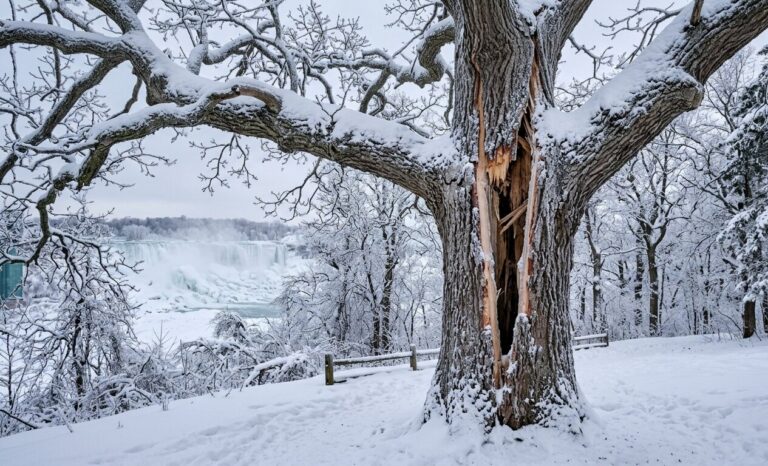
| Split trunk or major branch union | Structural damage | Avoid the area and arrange professional assessment |
| Large hanging branches | Risk of falling limbs | Keep clear and arrange qualified removal |
| Fresh trunk cracks | Possible structural weakness | Request a professional inspection |
| Broken branches over a roof or driveway | Potential impact hazard | Restrict access beneath the affected area |
| Extensive canopy breakage | Possible loss of structural integrity | Arrange an assessment to determine appropriate work |
Safety rule: A tree does not have to fall to become dangerous. A newly leaning tree, shifting root plate, or large suspended limb can present a serious hazard.
If a tree contacts a power line, stay well away and contact the utility company. Do not approach, touch, or attempt to move the tree or wire.
When Should You Call a Tree Service in Grand Island, NY?
The right time to contact a professional depends on the severity of the damage, the tree’s condition, and the consequences if another branch or the entire tree fails.
Call for Emergency Tree Service When:
- A tree has fallen onto a house, garage, or occupied structure.
- A large limb is suspended over a building, driveway, or frequently used area.
- A tree has suddenly leaned and the surrounding soil has lifted or cracked.
- Storm damage blocks essential access to the property.
- A damaged tree presents an immediate threat to people or nearby structures.
If people are in immediate danger, contact emergency services. For downed electrical wires or trees touching electrical equipment, stay away and notify the utility company.
For urgent tree hazards, homeowners can review 10X Tree Services’ Emergency Tree Service in Grand Island, NY.
Schedule a Professional Tree Inspection When:
- You notice deadwood or broken branches after a storm.
- A mature tree has visible cracks, cavities, or weak branch unions.
- Branches extend over your roof, garage, driveway, or neighboring property.
- The same tree has sustained repeated storm damage.
- You are unsure whether a damaged tree can remain safely in place.
A professional assessment can help determine whether the appropriate solution is pruning, hazardous limb removal, continued monitoring, or complete tree removal.
Which Tree Service Is Appropriate After a Storm?
Storm-damaged trees do not all require the same treatment. The service should address the specific hazard rather than automatically removing every damaged tree.
| Tree service | When it may be needed | Main purpose |
|---|---|---|
| Tree trimming and pruning | Deadwood, broken branches, or selected structural defects | Address specific branch hazards |
| Hazardous limb removal | Large damaged limbs near buildings or access routes | Remove dangerous branches |
| Storm damage cleanup | Fallen branches and scattered tree debris | Restore safe access and clear the property |
| Emergency tree removal | A tree presents an unacceptable hazard | Remove the hazardous tree safely |
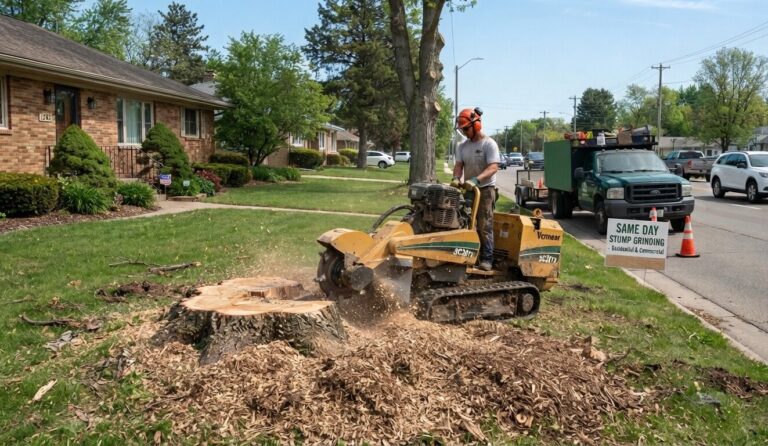
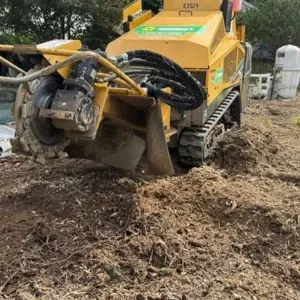
| Stump grinding | A tree has already been removed | Grind the remaining stump below ground level |
| Preventive tree maintenance | Developing defects or clearance issues | Identify and address certain risks before future storms |
A qualified tree professional should explain why a particular service is recommended. Some storm-damaged trees can be retained, while severe structural damage may make removal the safer option.
How Grand Island Homeowners Can Reduce Storm Related Tree Risks
Preventive maintenance cannot guarantee that a tree will survive every storm. However, it can help homeowners identify certain defects and address avoidable hazards before severe weather arrives.
1. Inspect Mature Trees Before Storm Season
Look for dead branches, unusual canopy dieback, trunk cracks, cavities, and changes in a tree’s lean.
Inspect trees after major storms, too. Seek professional help when defects are difficult to assess from the ground or when a tree stands near an important structure.
2. Arrange Proper Tree Pruning
Professional pruning can remove deadwood, address selected structural problems, and maintain appropriate clearance from roofs and other structures.
Avoid excessive canopy removal or tree topping. Improper pruning can damage tree structure and create additional maintenance problems.
3. Protect the Root Zone
Avoid cutting major roots, piling soil against the trunk, or repeatedly driving heavy equipment over the root zone.
Root damage can affect stability and long-term tree health. If you notice erosion, exposed roots, or disturbed soil around a mature tree, seek professional advice before making changes.
4. Evaluate Trees Near Homes and Driveways
A tree’s risk depends not only on its likelihood of failure but also on what it could hit if it fails.
A damaged branch over an unused section of lawn presents a different potential consequence from a similar branch over a bedroom, vehicle, or frequently used driveway. Prioritize assessment based on the tree’s condition and the people and property within its potential fall zone.
5. Prepare Your Property for Severe Weather
Before a forecast storm, move vehicles away from visibly compromised trees when possible and secure outdoor objects that could become airborne.
After the storm, do not walk beneath hanging limbs or approach a leaning tree with disturbed soil. Photograph visible damage from a safe location for documentation, and contact qualified professionals when hazards require attention.
Choosing the Right Tree Service Grand Island NY Homeowners Can Trust
When storm damage threatens a property, homeowners need a tree service that understands hazardous tree removal, pruning, cleanup, and the safety requirements of working near buildings and utilities.
Before approving a job, ask:
- Is the company insured for the work being performed?
- Does the written estimate specify pruning, removal, debris hauling, and stump grinding?
- How will the crew protect nearby buildings, fences, landscaping, and access routes?
- Does the proposed work address the specific damage or defect?
- Is specialized equipment required for the tree’s size, condition, or location?
A clear estimate should explain the work to be performed and any additional services that may affect the final cost.
How 10X Tree Services Helps Grand Island Property Owners
10X Tree Services is a tree care business based on Grand Island, NY, serving local homeowners and communities across Western New York. Its services include tree removal, tree trimming and pruning, stump grinding, land clearing, and emergency storm response.
When river winds or severe storms damage a tree, the appropriate response depends on its structural condition, the surrounding property, and the urgency of the hazard.
10X Tree Services can be contacted to discuss storm damage, request an estimate, and determine the appropriate next steps for a property.
Explore the dedicated Tree Service Grand Island NY page for local services and contact information.
Request tree service in Grand Island, NY
Call (716) 599-8733 to discuss a damaged tree or request an estimate. For immediate danger to life or an electrical hazard, contact the appropriate emergency service or utility first.
Frequently Asked Questions About River Wind Tree Damage on Grand Island
Can river winds damage healthy trees on Grand Island?
Yes. Severe wind can break branches or uproot trees, including healthy trees. The outcome depends on wind intensity, soil conditions, root stability, canopy structure, and the tree’s location.
What are the first signs of wind-damaged trees?
Common warning signs include a sudden lean, cracked soil near the trunk, exposed roots, broken branches, trunk cracks, and hanging limbs. Keep clear of suspected hazards and arrange a professional assessment.
Should a wind-damaged tree always be removed?
No. Some damaged trees can be retained with appropriate pruning or monitoring. Trees with severe structural damage or an unacceptable risk to people and property may require removal following professional evaluation.
When should I contact an emergency tree service in Grand Island, NY?
Contact a qualified emergency tree service when a tree or large limb threatens a building, blocks essential access, or presents an immediate falling hazard. If electrical wires are involved, stay away and contact the utility company.
Can tree pruning prevent river wind damage?
Pruning can address selected defects, remove deadwood, and improve certain aspects of tree structure. It cannot guarantee that a tree will withstand severe winds or prevent every instance of storm damage.
What should I do if a tree falls on my house?
Keep people away from the affected area, do not enter a potentially damaged structure if it may be unsafe, and call emergency services if anyone is in danger. Contact the utility company if electrical lines are involved, then arrange qualified emergency tree assistance.
How often should Grand Island trees be inspected?
Inspect trees regularly and after severe weather. The Town of Grand Island’s Community Forestry Management Plan emphasizes proactive maintenance, risk assessment, and storm preparedness. Trees with significant defects or exposure to important targets may need more frequent professional evaluation.
Final Takeaway: Recognize Tree Hazards Before the Next Storm
Grand Island’s Niagara River setting and Western New York weather make storm preparedness an important part of responsible tree care. High winds, saturated soil, snow, and ice can expose weaknesses in mature trees and create hazards around homes and driveways.
Watch for sudden leaning, lifted soil, cracked trunks, and hanging branches. Avoid hazardous DIY work, arrange professional assessment when necessary, and address serious risks promptly.
For homeowners who need tree service Grand Island NY, 10X Tree Services provides local tree care, removal, pruning, and emergency storm response. The right assessment can help determine whether a tree needs maintenance, cleanup, or more urgent intervention.