Tree care guide
Tree Removal in North Tonawanda, NY: Costs and What to Expect
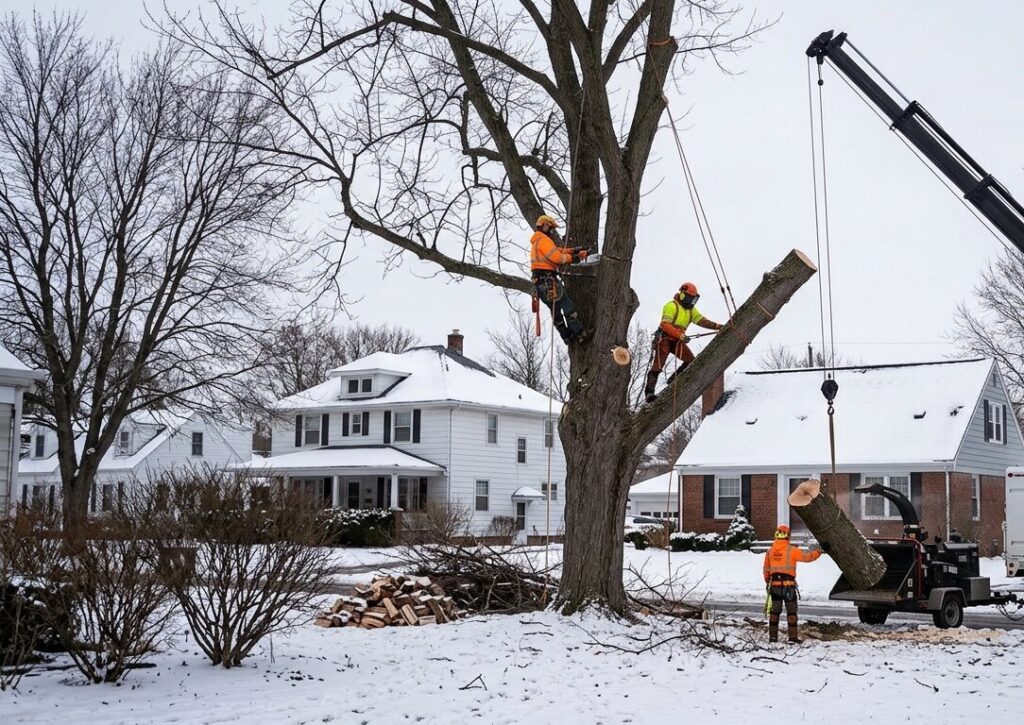
Tree removal in North Tonawanda NY, can cost several hundred dollars for a straightforward job and significantly more when a tree is large, hazardous, difficult to access, or close to buildings and utility lines. The final price depends on the tree’s size, condition, location, equipment access, removal method, and cleanup requirements.
Removing a tree is a major property decision. A dead tree near a house, a storm damaged maple leaning toward a garage, or a declining tree with damaged roots can create safety concerns that should not be ignored.
For North Tonawanda homeowners, understanding the removal process, local tree regulations, contractor estimates, and cleanup options can help prevent unexpected costs and unnecessary property damage.
How Much Does Tree Removal Cost in North Tonawanda, NY?
Tree removal prices in North Tonawanda vary from one property to another. A small tree in an open yard is very different from a mature tree that must be dismantled in sections above a roof, fence, driveway, or neighboring property.
One online 2026 cost estimator lists a typical North Tonawanda tree removal range of approximately $683–$794, with an estimated average of $738. Treat this as a broad online planning reference not a guaranteed local market average, written quote, or price applicable to every tree.
The estimate for your property may be lower or substantially higher depending on the job.
What Determines the Final Tree Removal Price?
| Cost factor | Why it affects the estimate |
|---|---|
| Tree height and trunk diameter | Larger trees generally require more labor, equipment, and removal time. |
| Tree condition | Dead, decayed, split, or unstable trees may require additional precautions. |
| Location | Trees close to houses, garages, fences, sidewalks, and neighboring properties require careful planning. |
| Equipment access | Narrow gates, steep ground, landscaping, and limited access can make removal more complicated. |
| Removal method | Cutting a tree down in an open area differs from dismantling it in controlled sections. |
| Debris and wood disposal | Chipping branches, hauling logs, and removing debris can affect the total price. |
| Stump grinding | Grinding the remaining stump is often a separate service unless included in the estimate. |
The most useful way to compare prices is to request written estimates based on the same scope of work. A lower price may not include stump grinding, hauling, or complete cleanup.
Why Two Similar Sized Trees Can Have Different Prices
Consider two hypothetical North Tonawanda properties with mature maple trees of similar height.
- Property A: The tree stands in an open backyard with equipment access and plenty of room for controlled felling.
- Property B: The tree stands beside a house, above a fence, with branches extending over a garage and limited equipment access.
Although the trees may be similar in size, Property B may require sectional dismantling, additional rigging, and more careful debris handling. That additional work can increase the estimate.
This is why a contractor should evaluate the tree and its surroundings instead of quoting solely from its height.
When Should a Tree Be Removed?
Not every unhealthy-looking tree needs to be removed. Some damaged trees can recover with appropriate pruning, monitoring, or professional care. However, certain conditions may indicate that removal is the safer or more practical option.
1. A Dead or Severely Declining Tree
A dead tree may lose branches, develop brittle wood, and become increasingly unstable. Large dead limbs can fall without much warning, particularly during strong winds or heavy snow.
Look for:
- Extensive dead branches throughout the crown.
- Large sections of missing bark or visible decay.
- Significant trunk cavities or structural damage.
- Little or no healthy foliage during the growing season.
- Major sections of the tree that have already died.
Dead branches alone do not automatically mean the entire tree must come down. A qualified tree professional can assess whether selective pruning is sufficient or whether removal should be considered.
2. A Leaning Tree With Signs of Root Failure
A tree that has always grown at an angle may be structurally stable. A sudden change in its position, however, can indicate a serious problem.
Watch for:
- Newly exposed or lifted roots.
- Cracked or heaving soil around the base.
- A trunk that has recently shifted.
- Cracks where major roots meet the trunk.
- A new lean following strong wind or saturated ground.
If a tree appears to be actively shifting or could fall toward a building, keep people away and arrange a professional assessment.
3. Trunk Cracks, Splits, or Structural Damage
A major crack in the trunk or a weak connection between large stems can compromise a tree’s stability.
Pay particular attention to deep vertical cracks, split unions, large dead sections, and visible decay near the trunk base.
A surface crack does not always mean removal is necessary. The location, depth, extent, and structural implications must be evaluated.
4. Storm Damaged Trees and Broken Limbs
Western New York weather can bring strong winds, heavy rain, ice, and lake-effect snow. These conditions can break branches, split trunks, and damage root systems.
After a storm, inspect your property from a safe distance for:
- Large hanging or broken branches.
- Split trunks or partially fallen trees.
- Trees resting on roofs, garages, or vehicles.
- Root plates lifting out of the ground.
- Branches resting on or near electrical wires.
Never approach a suspended tree or attempt to cut a branch that is under tension. Contact a qualified professional to assess the situation.
5. Trees Threatening Buildings or Access Areas
A tree may become a concern when its structural condition creates a credible risk to a home, garage, driveway, or frequently used outdoor area.
The presence of branches over a roof does not automatically mean the tree needs removal. Depending on its condition and structure, selective pruning may address the concern.
A professional assessment can help determine whether pruning, monitoring, or complete removal is appropriate.
What Types of Trees May Need Attention in North Tonawanda?
North Tonawanda properties include a mix of mature shade trees, ornamental trees, and trees growing near residential structures. Species alone do not determine whether a tree is hazardous, but certain issues deserve attention.
| Tree or tree group | Potential concern | What homeowners should watch for |
|---|---|---|
| Silver maple | Large limbs, structural defects, and root-related conflicts | Weak branch unions, decay, damaged roots, and major deadwood |
| Oak | Structural defects and species-specific diseases | Cracks, crown decline, dead branches, and unusual leaf symptoms |
| Ash | Emerald ash borer damage | D-shaped exit holes, crown dieback, and woodpecker activity |
| Willow | Large branches and declining wood | Dead limbs, trunk decay, and damaged branch attachments |
| Ornamental trees | Localized decline or storm damage | Broken limbs, trunk injuries, and root problems |
Emerald Ash Borer and Ash Tree Decline
Emerald ash borer (EAB) is an invasive insect that attacks ash trees. Infestation can disrupt the movement of water and nutrients beneath the bark, eventually causing significant decline or death.
Possible warning signs include:
- D-shaped exit holes in the bark.
- Thinning foliage or upper-crown dieback.
- Increased woodpecker activity.
- Vertical bark splits.
- Epicormic shoots growing along the trunk.
These signs can indicate an infestation, but they should be evaluated rather than treated as proof on their own.
If a mature ash tree is declining near a house, driveway, or other frequently used area, arrange a professional inspection. The appropriate response depends on the tree’s condition, location, and structural risk.
North Tonawanda Tree Removal Rules: What Homeowners Should Know
Before arranging work, determine whether the tree is on private property or public property. This distinction matters under the City of North Tonawanda’s tree regulations.
What Does Chapter 91 Say?
The City’s Chapter 91: Trees addresses the protection and management of trees on public property.
Under §91-3(H), a person must submit a written request and obtain written permission from the Department of Public Works or the Mayor before planting, pruning, removing, replacing, or otherwise disturbing a tree or shrub on a public street, park, or other City-owned property.
The ordinance also addresses street trees, restrictions on topping, and the City’s responsibilities for hazardous trees on City-owned property.
Important: These provisions concern public property. They should not be interpreted as establishing a blanket City tree-removal permit requirement for every tree located entirely on privately owned residential property.
If a tree is near a sidewalk, street right-of-way, public land, or property boundary, confirm its location and applicable requirements before work begins.
What About Emergency Tree Work?
Chapter 91 §91-5 provides an exception for emergency activity immediately necessary to protect life, safety, property, or access to property.
The provision also calls for reasonable efforts to notify the Department of Public Works before the work begins and written notice of the emergency and work performed afterward.
For a tree on or near public property, contact the City to clarify the appropriate procedure whenever circumstances allow.
Official reference: City of North Tonawanda – Chapter 91: Trees
If the tree is close to a property line, do not assume that the trunk’s apparent location settles ownership. Check the boundary and seek clarification before authorizing removal.
What to Expect During a Professional Tree Removal
A properly planned tree removal involves more than cutting through the trunk. The contractor should evaluate the site, select a safe removal method, protect nearby property, and establish how the debris will be handled.
Step 1: Tree and Property Assessment
The contractor examines the tree’s height, trunk diameter, condition, lean, branch structure, and proximity to buildings and other obstacles.
The surrounding area also matters. The assessment should consider fences, driveways, landscaping, sheds, sidewalks, neighboring structures, and equipment access.
Step 2: Removal Plan and Written Estimate
After evaluating the job, the contractor should explain the proposed removal method and provide a clear estimate.
Ask whether the quoted price includes:
- Tree cutting and dismantling.
- Branch chipping and log handling.
- Debris hauling and disposal.
- Basic site cleanup.
- Stump grinding, if requested.
- Additional charges for restricted access or specialized equipment.
A written estimate makes it easier to understand exactly what you are paying for.
Step 3: Work Area Preparation
Before cutting begins, the crew should establish a controlled work area and identify potential hazards.
Depending on the property, this may involve restricting access, positioning equipment, protecting nearby features, and coordinating with utility providers when necessary.
Homeowners, children, pets, and visitors should stay outside the work zone.
Step 4: Tree Removal
The removal method depends on the tree’s position and surrounding conditions.
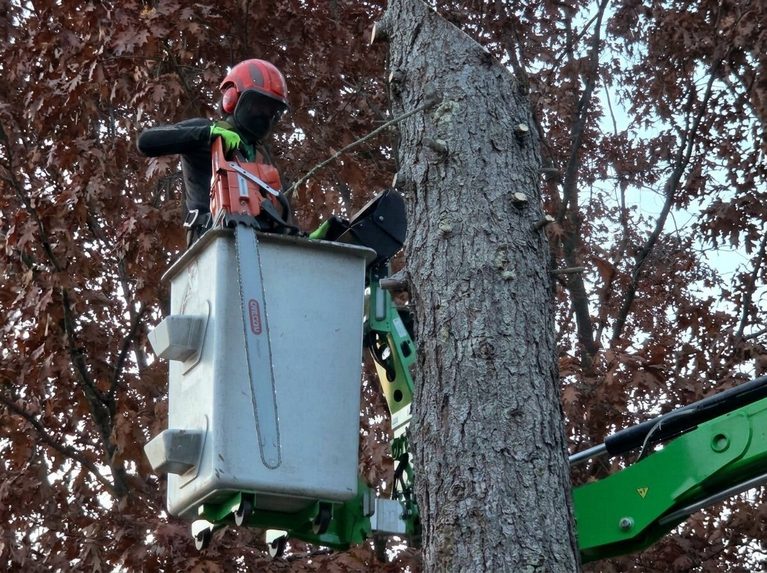
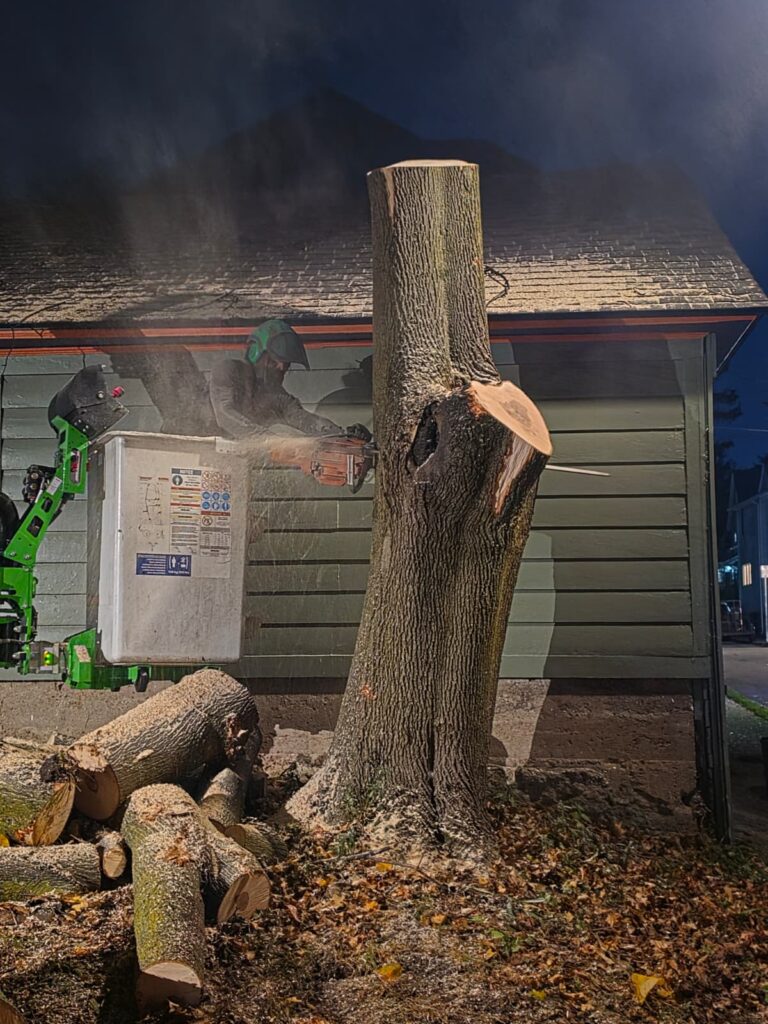
A tree in an open area may be felled in a controlled direction when there is sufficient clearance. A tree close to a house or other structure may need to be dismantled in smaller sections using ropes, rigging, or specialized equipment.
The objective is to manage each section safely and reduce the risk of damage to surrounding property.
Step 5: Debris Removal and Cleanup
Once the tree is down, the crew processes branches and logs according to the agreed scope.
Depending on your preferences and estimate, wood may be hauled away, left for firewood, or handled another way. Branches may be chipped, and the work area should be cleaned according to the contractor’s written agreement.
Step 6: Stump Grinding or Removal
Cutting down a tree does not automatically remove the stump.
If you want the area restored for lawn use, landscaping, or another project, ask whether stump grinding is included or priced separately.
Stump Grinding vs. Complete Stump Removal
Homeowners often use these terms interchangeably, but they describe different approaches.
| Feature | Stump grinding | Complete stump removal |
|---|---|---|
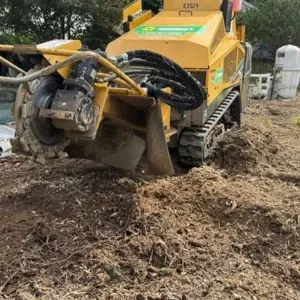
| Main process | A grinding machine reduces the stump below ground level | The stump and a larger portion of the root mass are excavated |
| Ground disturbance | Usually more limited | Usually greater |
| Remaining roots | Most major roots remain underground and decay naturally over time | More of the root mass is removed, depending on the job |
| Best suited for | Lawn restoration and many landscaping projects | Projects requiring more extensive stump and root removal |
| Site preparation | Often requires filling and leveling the resulting area | Usually requires backfilling and additional ground restoration |
For many residential properties, stump grinding is sufficient. However, if you plan to build, install hardscaping, or replant in the same location, discuss the intended use with the contractor before choosing a method.
Ask how deep the stump will be ground, what happens to the wood chips, and whether filling and leveling are included.
How to Choose a Tree Removal Company in North Tonawanda
Choosing a tree contractor based only on the lowest price can create unnecessary risk. Tree removal involves heavy equipment, elevated work, falling limbs, and potential damage to nearby property.
Before hiring a company, consider the following:
Verify Insurance
Ask for current proof of appropriate insurance coverage. Confirm that the coverage applies to the work being performed and ask whether the contractor can provide a certificate of insurance.
Do not rely only on a verbal statement that the company is insured.
Ask About Experience and Qualifications
For complex or hazardous trees, ask who will assess the tree and supervise the work.
An International Society of Arboriculture (ISA) Certified Arborist may be useful when a tree’s health, structure, or risk needs a professional assessment. Certification should be verified rather than assumed.
Understand the Removal Method
Ask how the crew plans to remove the tree, particularly if it is close to a house, garage, fence, or utility line.
A professional should be able to explain the proposed approach in understandable terms.
Get a Written Estimate
The estimate should identify the tree or trees being removed and explain what is included in the price.
Clarify cleanup, wood disposal, stump grinding, and any additional work before accepting the proposal.
Never Treat Electrical Hazards as DIY Work
Do not cut or move branches that are touching, resting on, or close to electrical lines.
The New York State Department of Environmental Conservation advises homeowners to contact their utility company when limbs are on or near power lines. Keep away from the area and let trained utility personnel address the electrical hazard.
Does Homeowners Insurance Cover Tree Removal?
Insurance coverage depends on the policy, the cause of the damage, and what the fallen tree affects.
A tree that falls onto an insured house, garage, or other covered structure may be handled differently from a tree that falls in an open yard without damaging insured property.
Before authorizing non-emergency work, review your policy and contact your insurance provider if the tree is associated with a covered storm or property-damage claim.
Ask your insurer:
- Is the tree damage covered under my policy?
- Is removal covered when a tree damages an insured structure?
- Does the policy cover debris removal?
- Are there limits or conditions for emergency mitigation?
- Do you need photographs, an inspection, or an estimate?
Take photographs from a safe location before cleanup when possible. Do not put yourself in danger to document damage.
Tree Removal and Emergency Storm Response in North Tonawanda
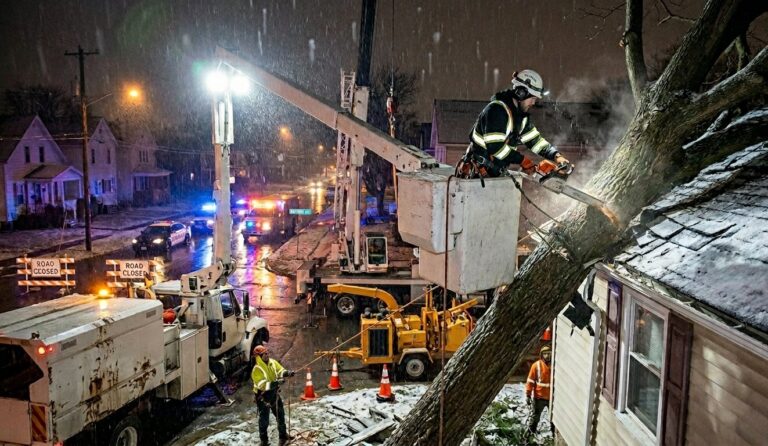
Storm damage can create immediate hazards, especially when a tree or large limb lands on a house, vehicle, driveway, or access route.
If a tree has fallen onto a structure or appears unstable:
- Keep people and pets away from the affected area.
- Do not climb onto the roof or approach a suspended tree.
- Stay clear of electrical wires and report downed lines to the utility company.
- Contact emergency services if anyone is in immediate danger.
- Arrange a qualified tree professional to assess the damage.
- Contact your insurer when property damage may be covered.
Do not attempt to pull a fallen tree off a building or cut a storm-damaged trunk yourself. Wood under tension can move suddenly and cause serious injuries.
Tree Removal in North Tonawanda, NY: How 10X Tree Services Can Help
Homeowners looking for tree removal in North Tonawanda need a contractor who understands the importance of safe work, clear estimates, and proper cleanup.
10X Tree Services lists North Tonawanda among its Western New York service areas. Based on Grand Island, the company provides tree removal, tree trimming and pruning, stump grinding, land clearing, and storm-damage response across its listed service communities.
For a tree that may need attention, homeowners can contact the company to discuss the situation and request a quote.
Before scheduling, describe the tree’s condition, its location, nearby structures, and any visible storm damage. Photos can help communicate the situation, although a site assessment may still be necessary to determine the work involved.
Contact 10X Tree Services
- Phone: (716) 599-8733
- Email: sales@10xtreeservices.com
- Website: 10X Tree Services
- Service areas: 10X Tree Service Areas
For urgent situations involving a tree on a house, vehicle, or access route, call and explain the hazard. Keep everyone away from the affected area while waiting for professional assistance.
Frequently Asked Questions About Tree Removal in North Tonawanda, NY
1. How much does tree removal cost in North Tonawanda, NY?
The price depends on tree size, condition, location, access, removal complexity, and cleanup requirements. One online 2026 estimator lists a typical range of approximately $683–$794, but this is only a planning reference. Request a property-specific written estimate for an accurate price.
2. Do I need a permit to remove a tree on my private property in North Tonawanda?
Chapter 91 of the City Code primarily regulates trees on public streets, parks, and other City-owned property. Its written-permission requirement applies to work involving those public trees. Do not assume that it creates a blanket permit requirement for every privately owned tree. Confirm requirements if the tree is near a public right-of-way or another regulated area.
3. Who is responsible for a tree located near the sidewalk?
Responsibility can depend on the exact location of the tree and the property boundary. A tree within a street right-of-way may be a street tree regulated by the City. Check with the North Tonawanda Department of Public Works before pruning or removing a tree that may be on public property.
4. Can a dead tree be removed during winter?
Tree removal can often be performed during winter when weather, ground conditions, access, and safety allow. However, snow, ice, frozen ground, and wind can affect equipment access and the removal plan. The contractor should evaluate the conditions before scheduling the work.
5. Does tree removal include stump grinding?
Not automatically. Some estimates include stump grinding, while others price it separately. Ask for the stump work to be listed clearly in the written estimate if you want the area cleared below ground level.
6. How long does it take to remove a tree?
A straightforward removal may take only part of a day, while a large or hazardous tree near buildings may require more time. Tree size, access, weather, equipment, and the removal method all affect the schedule.
7. Should I remove a tree that is leaning toward my house?
A lean does not automatically mean a tree is unsafe. However, a new or increasing lean, lifted roots, cracked soil, or trunk damage can indicate a serious structural problem. Keep away if the tree appears unstable and arrange a professional assessment.
8. Can a tree be saved instead of removed?
Yes. Some trees with dead branches, limited damage, or manageable structural issues may be retained through appropriate pruning, treatment, or monitoring. A qualified arborist can assess whether preservation is practical and safe.
9. What should I do if a tree falls on my house during a storm?
Keep everyone away from the affected area, avoid touching the tree or nearby wires, and contact emergency services if anyone is in immediate danger. Photograph the damage from a safe location and contact your insurance provider. Have the tree assessed by a qualified emergency tree professional.
10. Does 10X Tree Services serve North Tonawanda?
North Tonawanda is listed on the 10X Tree Services website as one of its service areas. Call (716) 599-8733 or email sales@10xtreeservices.com to discuss your property’s location, the work required, and scheduling.
Get a Tree Removal Estimate in North Tonawanda, NY
A tree that is dead, severely damaged, or showing signs of structural failure deserves attention especially when it is close to a home, garage, driveway, or other occupied area.
Before making a decision, understand the tree’s condition, compare the proposed removal methods, confirm what the estimate includes, and check whether public-property rules apply.
For tree removal, stump grinding, trimming, or storm-damage assistance, contact 10X Tree Services to discuss your project and request a quote.
Call (716) 599-8733 or visit 10xtreeservices.com.