Tree care guide
5 Signs Your Grand Island Silver Maple Needs Immediate Removal
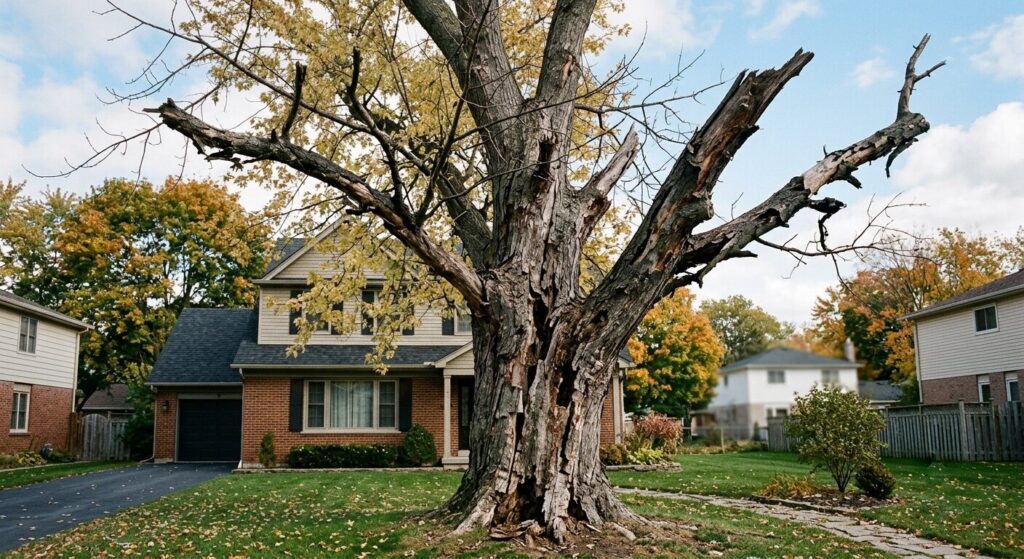
A silver maple may need immediate tree removal when a major trunk split, confirmed root failure, severe structural decay, or extensive storm damage creates a credible risk to people or property. Grand Island, NY, homeowners should treat sudden leaning, raised soil, and hanging limbs as warning signs requiring prompt professional assessment.
Silver maple (Acer saccharinum) is a fast-growing shade tree valued for its broad canopy. However, its mature size, large limbs, and structural condition can become concerns when the tree grows close to a home, driveway, garage, or other frequently used area.
For homeowners in Grand Island and nearby Kenmore, recognizing serious tree defects early can help prevent property damage and reduce the risk of injury.
Why Silver Maple Trees Need Special Attention in Grand Island, NY
Grand Island’s location between the Niagara River channels exposes trees to changing winds, lake-effect snow, and winter ice. These conditions can place additional stress on large branches and trees with existing structural defects.
The Town of Grand Island’s Community Forestry Management Plan identifies 1,138 inventoried silver maples, representing approximately 20.4% of its inventoried street trees. This local data highlights how relevant silver maple care is to the community. It does not mean every silver maple is dangerous or needs removal.
Source: Town of Grand Island Community Forestry Management Plan.
The New York State Department of Environmental Conservation (NYSDEC) identifies defects such as trunk cracks, dead branches, cavities, fungal growth, and a new lean with raised soil as reasons to seek professional evaluation. The number and severity of defects, together with what could be struck if the tree failed, help determine the level of risk.
Source: NYSDEC — Managing Risk in Urban Trees.
1. Deep Trunk Cracks or a Splitting Main Stem
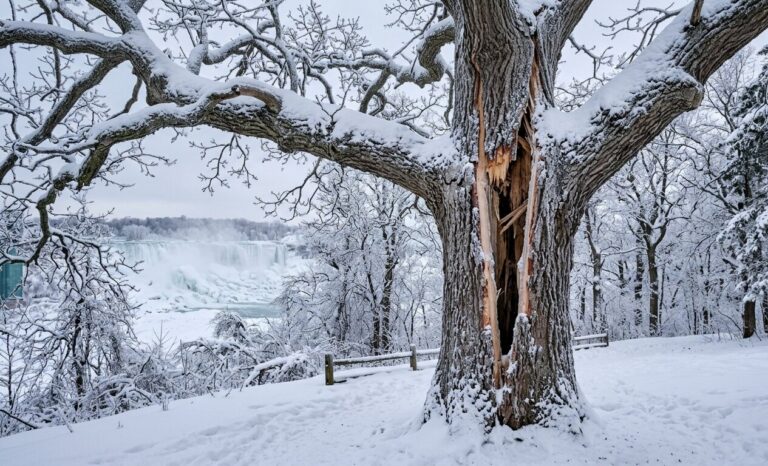
A large crack running down the trunk of a mature silver maple can indicate a serious structural weakness. The concern becomes greater when the crack is widening, the trunk is visibly separating, or the tree has multiple stems with a weak connection.
Snow and ice accumulation, strong winds, and the weight of a large canopy can increase stress on an already compromised tree.
Warning signs to look for
- A deep or widening crack in the main trunk.
- Two large stems separating at their junction.
- Fresh exposed wood or a visible split after a storm.
- A horizontal trunk crack or signs that the trunk is moving.
- A large limb attached at a weak, narrow V shaped union.
A minor surface wound is not automatically a reason for removal. However, a split trunk or a crack showing movement can signal a high risk of failure and requires urgent professional evaluation.
What should you do? Keep people away from the potential fall zone and arrange an urgent assessment. If the trunk is actively splitting or the tree appears unstable, do not wait for another storm before seeking help.
NYSDEC explains that split trunks can fail during storms and that horizontal cracks may indicate active structural failure.
2. A Sudden Lean or Raised Soil Around the Roots
A newly leaning silver maple is one of the most important warning signs to recognize, particularly after heavy rain, strong winds, or prolonged snowmelt.
The roots anchor the tree and help support its weight. When the root system begins to fail, the trunk may lean while the soil around the base lifts or cracks.
Signs of possible root failure
- The tree has developed a new lean.
- Soil is lifting or cracking near the trunk.
- Roots are exposed or visibly torn from the ground.
- The trunk appears to have shifted after a windstorm.
- Nearby ground has heaved on the side opposite the lean.
A mature tree that has always grown at an angle is not necessarily an immediate hazard. A sudden change in lean, especially when accompanied by raised soil, is much more concerning.
What should you do? Stay clear of the tree and arrange urgent professional evaluation. Established-tree root failure is generally not repairable, and removal may be necessary.
3. Extensive Trunk Decay, Large Cavities, or Fungal Growth
Decay can weaken the wood that supports a silver maple’s trunk and major branches. A tree may retain green leaves even when its internal structure has deteriorated.
Fungal growth, cavities, and damaged bark can indicate decay, but their presence alone does not establish that the entire tree must be removed. A professional needs to assess the location and extent of the defect, the remaining sound wood, and the consequences of potential failure.
Signs that warrant a professional assessment
- A large cavity in the trunk or a major branch.
- Mushrooms or fungal growth emerging from the trunk or root area.
- Extensive missing bark or exposed decaying wood.
- Soft, crumbling, or visibly deteriorating wood.
- Multiple decay symptoms occurring alongside cracks or dead branches.
The combination of defects matters. For example, a large cavity near a major trunk union may be more concerning when accompanied by a fresh crack, substantial canopy dieback, or evidence of root problems.
What should you do? Have the tree evaluated before deciding between pruning, monitoring, or removal. Do not fill cavities with concrete, foam, or other materials; NYSDEC advises against filling tree cavities because doing so can worsen the problem.
4. Large Dead Limbs or Extensive Canopy Dieback
A silver maple with several large dead branches may be experiencing disease, root stress, insect damage, or other decline. Dead wood can break away without warning, particularly during high winds, heavy snowfall, or ice accumulation.
A single dead branch does not necessarily mean the entire tree needs removal. The condition of the trunk, root system, remaining canopy, and branch attachments determines the appropriate response.
Look for these symptoms
- Large dead branches extending over a roof or driveway.
- Several broken limbs caught in the canopy.
- A dead or severely declining upper crown.
- Large areas of missing foliage during the growing season.
- Repeated branch failures or extensive deadwood throughout the crown.
Pay particular attention to branches above garages, walkways, patios, parked vehicles, and neighboring properties. These are areas where a falling limb could cause injury or property damage.
What should you do? Arrange professional pruning when the hazard is limited to removable branches and the tree remains structurally sound. If extensive canopy decline occurs alongside trunk decay, root failure, or major cracks, a full tree-risk assessment can determine whether removal is the safer option.
Never climb the tree or attempt to cut large overhead limbs yourself.
5. Severe Storm Damage or Multiple Structural Defects
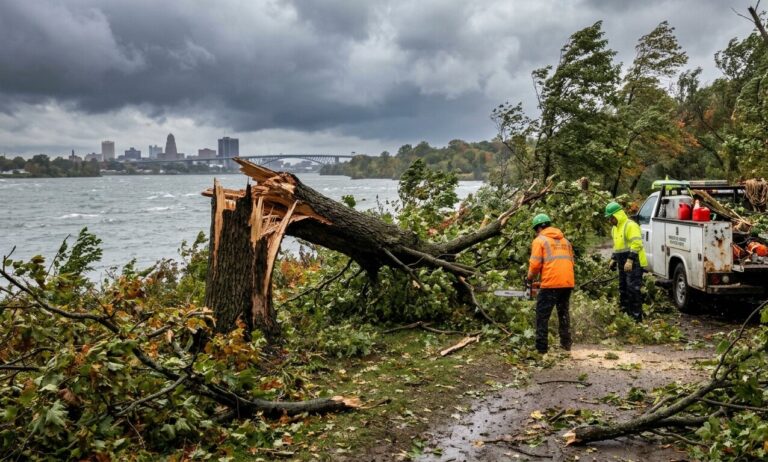
A silver maple can appear stable for years and become hazardous after a single severe storm. High winds, saturated soil, heavy snow, and ice can expose weaknesses that were previously difficult to recognize.
Storm damage deserves immediate attention when it affects the main trunk, root plate, or major structural limbs.
Serious storm-related warning signs
- The main trunk has split or partially broken.
- The root plate has lifted from the ground.
- A large limb is broken but remains suspended in the canopy.
- The tree is leaning suddenly toward a house or driveway.
- Major branches have broken away, leaving extensive structural damage.
- Several defects appear together after a storm.
When multiple defects occur in the same tree, the overall risk may be greater than any single symptom suggests.
What should you do? Keep people and pets away from the affected area. Contact a qualified tree professional for urgent assessment and emergency tree removal when necessary.
If a tree or branch is touching a power line, stay away and contact the utility company. Never attempt to move the branch or cut the tree yourself.
For urgent storm-related hazards, 10X Tree Services Affordable tree service in Grand Island NY provides an option for requesting assistance.
Silver Maple Removal: Warning Signs and Recommended Action
| Warning sign | Potential concern | Recommended response |
|---|---|---|
| Deep or widening trunk split | Structural failure | Keep clear and seek urgent assessment |
| New lean with raised soil | Possible root failure | Keep clear and arrange urgent evaluation |
| Large cavity with additional defects | Internal decay and reduced strength | Request a professional tree-risk assessment |
| Large dead or broken limbs | Falling-branch hazard | Arrange professional pruning or removal as appropriate |
| Severe storm damage | Compromised trunk, roots, or canopy | Restrict access and request urgent assessment |
| Limited deadwood without major structural defects | Localized branch hazard | Professional pruning may be sufficient |
Important: These signs are not a substitute for an on-site assessment. The safest course depends on the severity of the defect, the tree’s condition, and the people or property within striking distance.
Does Your Silver Maple Need Removal or Just Pruning?
Not every damaged silver maple needs to be cut down. In some cases, selective pruning can address deadwood, damaged limbs, or branches interfering with a roof. Removal becomes more likely when the tree has an uncorrectable structural defect that presents an unacceptable risk.
| Condition | Possible solution | When removal may be necessary |
|---|---|---|
| A few dead or damaged branches | Professional pruning | When branch damage is extensive or the whole tree is unsafe |
| Branches touching a roof | Clearance pruning | When the trunk or root system is also compromised |
| Small cavity without other serious defects | Monitoring and professional assessment | When decay and other evidence indicate unacceptable failure risk |
| New lean with raised soil | Urgent tree-risk assessment | When root failure is confirmed |
| Split trunk or major structural failure | Urgent assessment | Often when the main stem has split or is actively failing |
| Severe storm damage | Emergency assessment | When safe restoration is not practical |
A qualified tree professional can evaluate the tree and explain whether pruning, monitoring, or removal is appropriate. If removal is recommended, ask for an explanation of the defects and the work required.
How 10X Tree Services Helps Grand Island Homeowners
When a silver maple develops serious structural problems, homeowners need a clear assessment and a practical plan for protecting their property.
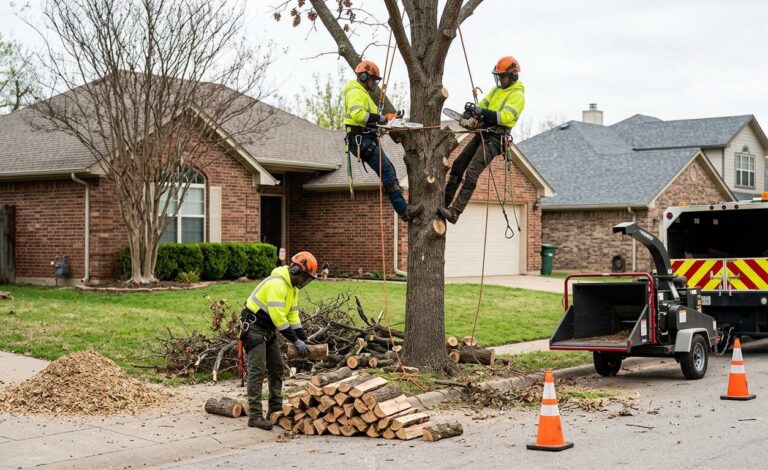
10X Tree Services is based on Grand Island, NY, and provides tree removal, tree trimming and pruning, stump grinding, land clearing, and emergency tree services. The company also serves nearby communities, including Kenmore and Tonawanda.
Learn more about 10X Tree Services in Grand Island, NY or visit the Kenmore NY service area page.
What to expect when requesting tree removal
- Describe the problem. Explain whether you see a crack, sudden lean, dead limbs, decay, or storm damage.
- Arrange an assessment. The tree’s condition, surrounding structures, access, and potential hazards need to be considered.
- Review the recommended work. Ask whether pruning or removal is appropriate and what the estimate includes.
- Plan for cleanup. Discuss branch and wood removal, stump grinding, and access to the work area.
10X Tree Services advertises free quotes and a 24/7 emergency line. For a potentially unstable tree, explain the warning signs when you call so the urgency is clear.
Contact 10X Tree Services
- Phone: (716) 599-8733
- Email: sales@10xtreeservices.com
- Website: https://10xtreeservices.com/
If the tree is actively failing, keep clear of the potential fall zone and do not wait for a routine appointment.
Frequently Asked Questions
1. How do I know if my silver maple needs immediate removal?
A split trunk, confirmed root failure, a sudden lean with raised soil, or severe storm damage may indicate an immediate hazard. Keep people away and arrange an urgent professional assessment. The final removal decision depends on the tree’s structural condition and the risk to nearby people or property.
2. Can a silver maple with a hollow trunk be saved?
Sometimes. A cavity does not automatically mean the tree is unsafe. Its size, location, remaining sound wood, other defects, and potential targets must be evaluated. Extensive decay combined with major structural defects may make removal necessary.
3. Is a leaning silver maple always dangerous?
No. Some trees develop a gradual lean as they grow. A new or worsening lean, especially with raised soil, cracked ground, or exposed roots, is much more concerning and requires prompt professional evaluation.
4. Can pruning fix a dangerous silver maple?
Pruning can address certain hazards, including deadwood, damaged branches, and some structural conflicts. It cannot reliably correct established root failure or a severely split main trunk. A professional assessment helps determine whether pruning can adequately reduce the risk.
5. When should Grand Island homeowners inspect silver maple trees?
Inspect trees periodically and after significant wind, snow, or ice events. Look for new cracks, hanging branches, changes in lean, raised soil, and canopy damage. Seek professional help when you notice serious defects rather than climbing the tree to investigate.
6. Does 10X Tree Services provide emergency tree removal in Grand Island?
10X Tree Services advertises a 24/7 emergency line for tree hazards and storm damage in Grand Island. Call (716) 599-8733 to report the situation and discuss the next steps.
7. Does 10X Tree Services serve Kenmore, NY?
Yes. Kenmore is listed among the nearby communities served by 10X Tree Services. Visit the Kenmore service area page for location-specific information.
Protect Your Property Before a Silver Maple Fails
A mature silver maple provides valuable shade, but major trunk splits, root failure, extensive decay, large dead limbs, and severe storm damage should never be ignored. Recognizing these warning signs gives homeowners time to restrict access, obtain professional advice, and choose an appropriate response.
For homeowners in Grand Island and Kenmore, the key is to distinguish a manageable tree care issue from a potentially dangerous structural failure.
If your silver maple has developed a sudden lean, a major trunk crack, or significant storm damage, contact 10X Tree Services at (716) 599-8733 to discuss an assessment and the safest next step.