Is It Safe to Remove a Tree in Winter? Buffalo NY Experts Explain

Yes, winter tree removal in Buffalo NY can be safe when the tree, weather, ground conditions, access, equipment, and surrounding property are properly evaluated. Frozen ground may improve equipment access, but snow, ice, high winds, slippery surfaces, and storm damaged trees can create serious hazards requiring professional planning.

Is Winter Tree Removal Safe in Buffalo NY?

Winter tree removal can be safe in Buffalo NY, but the season itself does not determine whether a removal should proceed.

The decision depends on several conditions:

  • Tree stability and structural condition
  • Snow and ice accumulation
  • Wind speed and weather forecast
  • Ground and soil conditions
  • Equipment access
  • Proximity to buildings, vehicles, fences, and utilities
  • Tree size and removal method
  • Crew and equipment safety

Buffalo winters can bring lake-effect snow, freezing temperatures, ice, strong winds, and rapidly changing conditions. Those factors can make some removals more complicated than the same project performed under favorable conditions.

For that reason, winter removal should be evaluated tree by tree and site by site.

Can Trees Be Removed in Winter?

Yes, trees can be removed during winter.

Trees do not need to wait until spring to be removed simply because temperatures are low.

In fact, winter can offer practical advantages for certain properties. Deciduous trees are dormant, leaves are absent, and frozen ground can sometimes provide better equipment access.

However, winter does not automatically make tree removal easier.

A professional evaluation should consider the condition of the tree, current weather, snow and ice, site access, and potential hazards before work begins.

Why Winter Can Be a Good Time for Tree Removal in Buffalo

There are several reasons homeowners may choose winter for tree removal.

1. Dormant Deciduous Trees

Many Buffalo-area deciduous trees lose their leaves during winter.

This can improve visibility through the crown and make certain structural defects easier to identify.

A leafless canopy may also provide a clearer view of:

  • Dead branches
  • Weak branch unions
  • Crossing limbs
  • Structural defects
  • Storm damage
  • Hanging branches

However, visibility alone does not make a tree safe to remove. The entire tree and surrounding site still need to be evaluated.

2. Frozen Ground May Improve Access

One of the biggest potential advantages of frozen ground tree removal is equipment access.

Soft or saturated soil can create problems for heavy equipment. Frozen ground may temporarily provide a firmer working surface.

That can be especially useful in properties where access is already restricted.

But frozen ground is not automatically better.

Extremely hard, uneven, icy, or snow-covered surfaces can create traction and equipment-control problems.

3. Less Landscape Activity

Winter can reduce activity in gardens and landscaped areas.

With many plants dormant, there may be less active landscaping around the work zone.

That can make certain removal projects easier to coordinate, although sensitive landscaping, hardscaping, irrigation systems, and underground utilities still need consideration.

When Is Winter Tree Removal Unsafe?

The question is not simply β€œCan you cut down trees in winter?”

The better question is:

β€œAre the current conditions safe enough to perform the removal?”

Winter removal may need to be postponed when conditions include:

Winter ConditionPotential Problem
High windsUnpredictable branch and tree movement
Heavy iceIncreased branch weight and structural stress
Deep snowHidden obstacles and difficult access
Icy surfacesSlips, falls, and equipment-control problems
Severe stormsAdditional unstable or damaged trees
Poor visibilityMore difficult work-zone management
Unstable treeGreater risk during cutting and rigging

A professional crew should be willing to delay work when weather or site conditions create unacceptable risk.

Safety should determine the schedule not the calendar.

How Buffalo Winter Weather Affects Tree Removal

Buffalo’s winter environment deserves special attention.

The region can experience significant snow and ice accumulation, freezing temperatures, wind, and rapid changes in weather.

Snow

Heavy snow can accumulate on branches and increase their load.

This can make already weak or structurally compromised limbs more hazardous.

Ice

Ice can add substantial weight to branches.

A damaged branch may become more likely to break when combined with ice loading and winter winds.

Wind

Wind can turn an already compromised tree into an immediate hazard.

A tree with decay, cracks, dead limbs, root problems, or previous storm damage may require urgent evaluation.

Rapid Weather Changes

A removal planned under favorable conditions may become unsafe if wind, freezing precipitation, or severe weather develops.

That’s why the weather forecast should be considered before and during a winter tree-removal project.

Is Frozen Ground Better for Tree Removal?

Sometimes but not always.

Frozen ground can reduce rutting and improve access for equipment on some properties.

This can be particularly useful when a large tree requires specialized equipment or when the work area is difficult to reach during wet conditions.

However, frozen ground can also become hard, uneven, or slippery.

Snow and ice can conceal:

  • Roots
  • Rocks
  • Drainage areas
  • Landscaping
  • Edges and slopes
  • Trip hazards
  • Other obstacles

The condition of the site matters more than the simple fact that the ground is frozen.

Does Winter Tree Removal Damage Your Yard?

Winter removal does not automatically mean your yard will be damaged.

The potential for lawn or landscape damage depends on:

  • Soil condition
  • Ground temperature
  • Equipment weight
  • Access route
  • Tree size
  • Removal technique
  • Number of trips across the property
  • Weather conditions

When conditions permit, frozen ground can sometimes help reduce rutting compared with soft, saturated soil.

But heavy equipment should never be moved across a property without considering the actual site conditions.

A careful removal plan can help protect lawns, driveways, landscaping, fences, structures, and other property features.

Is Winter Tree Removal Cheaper in Buffalo NY?

Not necessarily.

Winter can sometimes offer favorable conditions for specific projects, but there is no universal rule that tree removal is cheaper during winter.

The total cost depends on the project rather than simply the season.

Major cost factors can include:

  • Tree height
  • Trunk diameter
  • Tree condition
  • Location
  • Removal complexity
  • Equipment requirements
  • Rigging requirements
  • Crane requirements
  • Access limitations
  • Proximity to structures
  • Power-line hazards
  • Cleanup and debris handling
  • Number of trees

A small tree in an open backyard is very different from a large hazardous tree between a house, garage, fence, and utility line.

For Buffalo homeowners, the best way to understand the cost is to have the specific tree and property evaluated.

Should You Remove a Dangerous Tree Before Winter?

If a tree already shows significant structural problems, waiting for winter weather can increase the potential consequences.

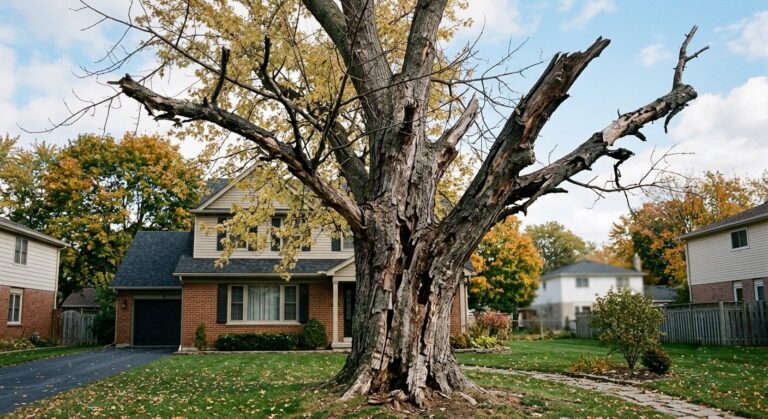
Warning signs can include:

  • Large dead branches
  • Significant trunk cracks
  • Leaning that appears to be worsening
  • Visible root damage
  • Cavities or decay
  • Split limbs
  • Hanging branches
  • Previous storm damage
  • Major branch loss
  • Weak or damaged branch unions

A tree does not need to be falling to become hazardous.

If you notice a potentially dangerous tree before Buffalo’s winter weather arrives, an evaluation can help determine whether pruning, monitoring, support, or removal is appropriate.

Can You Cut Down a Tree Yourself in Winter?

Technically, homeowners may be able to perform some very small pruning tasks.

But large tree removal is a different category of work.

Tree removal can involve falling timber, chainsaws, ropes, rigging, heavy equipment, suspended loads, unstable branches, and nearby structures.

Winter adds another layer of complexity because snow, ice, cold temperatures, and slippery surfaces can make the work more difficult.

DIY removal becomes particularly dangerous when a tree is:

  • Large
  • Leaning
  • Diseased or decayed
  • Close to a home
  • Near a garage
  • Near a fence
  • Over a driveway
  • Near vehicles
  • Close to power lines
  • Storm damaged

For large or hazardous trees, professional tree-removal planning is the safer approach.

What About Trees Near Power Lines?

Never treat a tree near an energized power line as a normal DIY tree removal project.

Branches and trunks can contact electrical lines during cutting or falling.

Even branches that appear to be far from the line can move unexpectedly.

If a tree has fallen onto or near power lines, stay away from the area and contact the appropriate utility or emergency service.

Do not attempt to cut, move, or pull the tree yourself.

Electrical hazards can remain present even when the situation does not appear immediately dangerous.

Winter Tree Removal vs. Waiting Until Spring

There is no universal rule that spring is better than winter.

The right timing depends on the tree and the property’s circumstances.

ConsiderationWinter RemovalWaiting Until Spring
Dormant deciduous treesOften favorableStill possible
Frozen groundMay improve accessGround may be softer
Snow/iceCan increase hazardsUsually less winter exposure
Severe weatherMust be monitoredConditions may be milder
Hazardous treeMay require prompt actionWaiting may increase exposure
Yard conditionsDepends on frozen/soft groundDepends on spring soil conditions
Emergency situationTiming may be immediateWaiting may not be appropriate

The most important consideration is tree risk and site safety, not simply the season.

Buffalo Neighborhoods Can Have Different Winter Removal Challenges

Winter tree work can look very different depending on the property.

In established Buffalo neighborhoods such as North Buffalo, Parkside, Elmwood Village, Allentown, South Buffalo, Black Rock, Riverside, University Heights, the Delaware District, Lovejoy, and Kaisertown, mature trees may be positioned close to homes, sidewalks, streets, garages, fences, and neighboring properties.

That can make access and controlled removal especially important.

The same considerations apply throughout Western New York communities such as Amherst, Cheektowaga, Tonawanda, West Seneca, and Lackawanna.

A tree’s location can be just as important as its size.

How Professionals Plan Winter Tree Removal

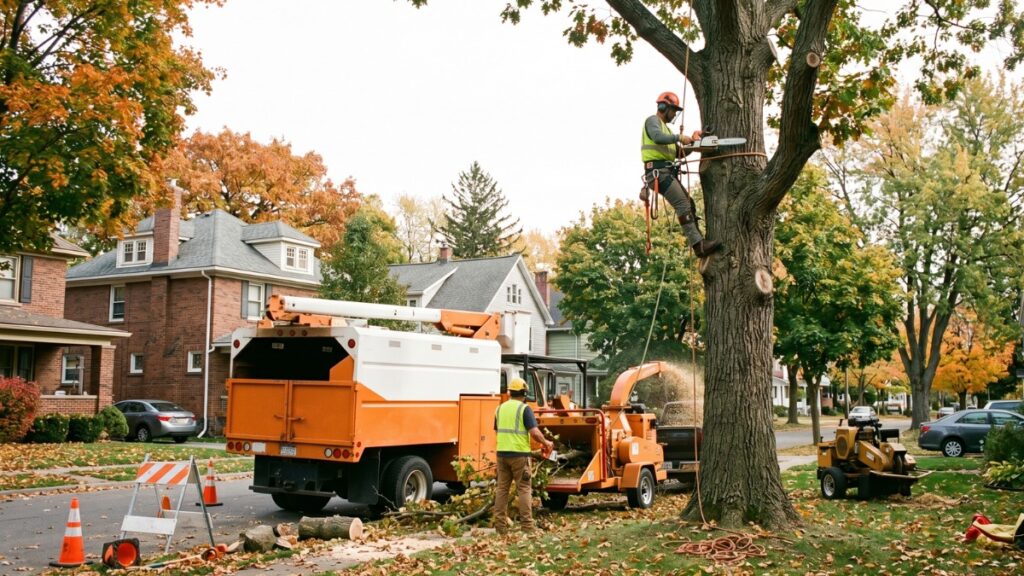
A professional winter removal should begin with an assessment rather than immediately cutting the tree.

Step 1: Evaluate the Tree

The tree’s species, size, condition, lean, branch structure, and visible defects should be considered.

Step 2: Evaluate the Weather

Snow, ice, wind, freezing precipitation, and the forecast can affect whether work should proceed.

Step 3: Inspect the Work Area

The removal plan should account for:

  • Homes
  • Garages
  • Vehicles
  • Fences
  • Sidewalks
  • Driveways
  • Landscaping
  • Utility lines
  • Equipment-access routes

Step 4: Determine the Removal Method

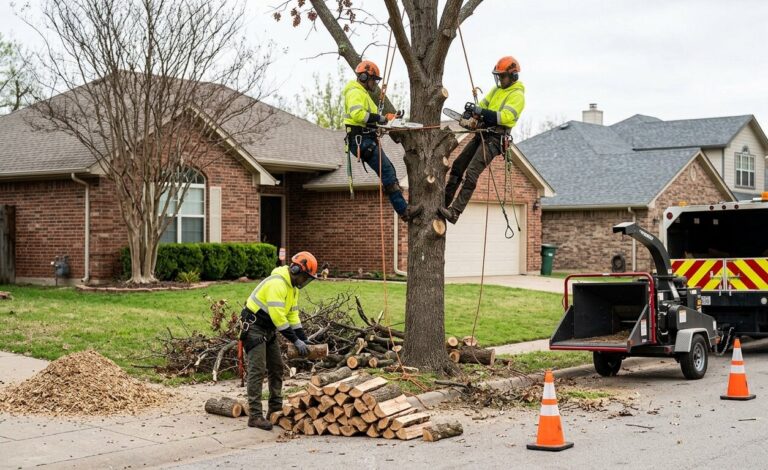
Depending on the tree and property, removal may involve controlled sectional dismantling, rigging, specialized equipment, or other techniques.

Step 5: Establish a Safe Work Zone

The area should be managed so that people, vehicles, and unnecessary equipment remain outside the active work zone.

Step 6: Plan Cleanup

Branches, logs, and other debris should be handled according to the agreed scope of work.

A professional plan should account for both removal and cleanup.

When Winter Tree Removal Becomes Emergency Tree Service

Winter weather can quickly turn a routine tree problem into an emergency.

Examples include:

  • A tree falls on a house
  • A large branch blocks a driveway
  • A tree falls across an access route
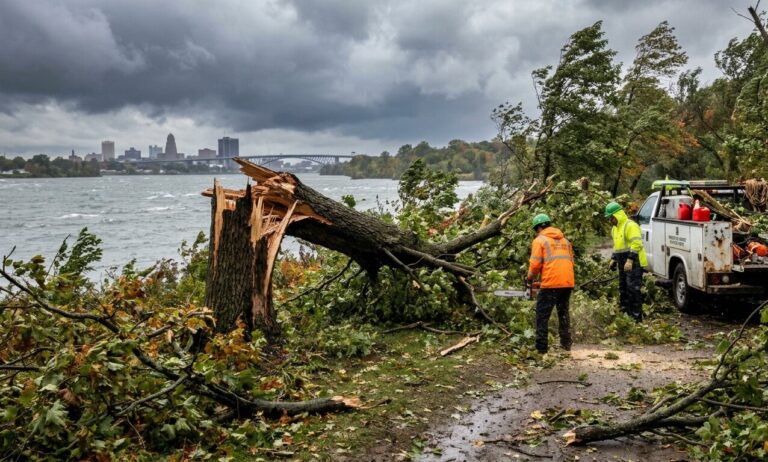
  • A storm damages a structurally compromised tree
  • A hanging limb threatens a structure
  • A tree becomes unstable after heavy snow or ice

In these situations, homeowners should avoid approaching unstable trees or attempting to remove large branches themselves.

The first priority is keeping people away from the hazard.

If utilities are involved, maintain a safe distance and contact the appropriate utility or emergency service.

What Buffalo Homeowners Should Check Before Scheduling Winter Removal

Before scheduling winter tree removal in Buffalo NY, consider these questions:

1. Is the tree structurally compromised?
Look for cracks, dead limbs, decay, major lean, or storm damage.

2. Is severe weather expected?
Snow, ice, and high winds can change the safety assessment.

3. Is equipment access available?
Determine whether the removal area can be safely reached.

4. Are structures nearby?
Homes, garages, fences, vehicles, and other property require careful planning.

5. Are power lines nearby?
Utility conflicts require specialized safety considerations.

6. What happens to the debris?
Confirm whether cleanup, hauling, and wood removal are included.

7. Is the tree removal estimate clear?
Homeowners should understand what work is included before authorizing the project.

Why Professional Experience Matters

Tree removal is more than cutting through a trunk.

Large trees can have unpredictable weight distribution, internal defects, weak branches, and complex fall patterns.

A professional removal plan considers how the tree will be dismantled, where pieces can safely go, what equipment is appropriate, and how people and property will be protected.

The International Society of Arboriculture also emphasizes the hazards associated with large-tree work and the importance of qualified professionals and appropriate equipment.

That makes professional assessment particularly important when winter conditions add snow, ice, wind, or difficult access.

10X Tree Services for Winter Tree Removal in Buffalo NY

For homeowners looking for winter tree removal Buffalo NY, 10X Tree Services provides tree-removal and tree-care services for homes and businesses throughout Buffalo and surrounding Western New York communities.

10X Tree Services

Services include:

  • Tree Removal Buffalo NY
  • Tree Trimming Buffalo NY
  • Hazardous Tree Removal
  • Fallen Tree Removal
  • Storm-Damage Cleanup
  • Emergency Tree Service
  • Stump Removal
  • Stump Grinding
  • Crane Tree Removal
  • Tree Care & Maintenance
  • Land Clearing

10X Tree Services focuses on practical planning, professional equipment, safety-conscious work, and property cleanup.

For a tree that may need removal before or during Buffalo’s winter season, homeowners can request an upfront estimate and discuss the specific conditions of the property.

Call 10X Tree Services today to discuss your tree removal needs.

Final Answer: Is It Safe to Remove a Tree in Winter?

Yes, winter tree removal can be safe in Buffalo NY when conditions are properly evaluated and the work is professionally planned.

Frozen ground may improve access in some situations, while dormant trees can provide better visibility of their structure.

However, Buffalo’s snow, ice, wind, freezing temperatures, and storm-damaged trees can create additional hazards.

The safest approach is to evaluate the tree, weather, ground conditions, equipment access, utilities, surrounding structures, and removal method before work begins.

If a tree presents an immediate hazard, waiting for spring may not be the best option.

Frequently Asked Questions

Can trees be removed in winter?

Yes. Trees can be removed during winter when weather, ground conditions, access, equipment, and the tree itself can be safely managed.

Is winter a good time for tree removal in Buffalo NY?

It can be. Dormant trees and frozen ground may offer practical advantages, but snow, ice, wind, and slippery conditions can increase risk.

Is frozen ground better for tree removal?

Sometimes. Frozen ground may provide a firmer surface for equipment and reduce rutting, but icy or uneven frozen surfaces can also create hazards.

Can you cut down trees in winter?

Yes, but large tree removal should not be treated as a simple DIY project. The risks can increase when snow, ice, structures, utilities, or unstable trees are involved.

Is winter tree removal cheaper?

Not automatically. Tree size, condition, location, access, equipment, rigging, hazards, and cleanup typically have a greater effect on project cost than the season alone.

What should I do if a tree falls during a Buffalo winter storm?

Stay away from unstable trees and hanging branches. If power lines are involved, keep a safe distance and contact the appropriate utility or emergency service. For tree-removal needs, have the site professionally assessed.

Should I remove a hazardous tree before winter?

If a tree already shows serious structural problems, having it evaluated before severe winter weather can help determine whether removal or another corrective measure is appropriate.

Can snow and ice make tree removal dangerous?

Yes. Snow and ice can increase branch loads, reduce traction, limit visibility, and complicate equipment access.

Who should remove a large tree near a house?

Large or hazardous trees near structures should be evaluated and removed by appropriately trained and equipped professionals rather than handled as a DIY project.

Bottom line: Winter itself does not make tree removal unsafe. Poor weather, unstable trees, difficult access, electrical hazards, and inadequate planning do. For Buffalo homeowners, the safest winter-removal decision starts with a professional assessment of the actual tree and property conditions.